Does Jet Lag Lower HRV? Travel, Sleep & Recovery Effects

Key Takeaways
-
Jet lag often lowers heart rate variability (HRV), or how much the time between heartbeats varies, after long-haul travel, mainly because the body clock falls out of step with the new time zone.
-
Travel adds its own strain through dehydration, alcohol, long hours of sitting, and disrupted routines, so a post-flight HRV dip reflects more than time zones alone.
-
Because HRV is usually tracked overnight, broken sleep from a new time zone tends to show up as a lower score the next morning.
-
HRV usually returns to its normal range over several days, faster after short trips and longer after flights east or across many time zones.
-
Nuropod uses Parasym’s proprietary AVNT™ waveform. In clinical studies, heart rate variability increased by an average of 18%.*
What Is HRV & What Does It Reveal About Jet Lag?
Jet lag often causes a temporary dip in HRV, though not for every traveler or trip. Heart rate variability, or HRV, is how much the time between heartbeats varies, which reflects how well the body handles stress. It measures the gaps between beats rather than beats per minute.
A heart beating 60 times a minute with perfectly even gaps has very low HRV. One beating at the same rate with slightly uneven gaps has higher HRV. Those small shifts reflect the nervous system adjusting moment to moment, between fight or flight and rest and digest.
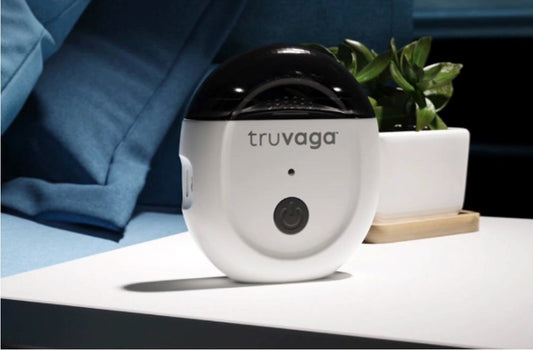
Nuropod is designed to support your nervous system. It sends gentle electrical pulses through the tragus, where the vagus nerve reaches the skin of the ear. The vagus nerve carries signals between the brain and organs, including the heart.

How Jet Lag & Travel Affect HRV
Jet lag and travel tend to lower HRV through several compounding disruptions, so a post-flight reading reflects the combined strain rather than jet lag alone.
The biggest factor is circadian mismatch: the body clock stays on home time while meals, daylight, and sleep follow the destination time. Sleep usually suffers too, with shorter nights, later bedtimes, more waking, or waking while the body still expects nighttime.
Everyday routines change at the same time. Meal timing, physical activity, light exposure, and work demands can look nothing like a normal day. Travel adds physical strain on top of that, from long transit times and early departures to hours spent sitting, no matter how many time zones you cross.
Because these factors overlap, HRV is best read as one part of the recovery picture rather than a stand-alone jet lag test. A dip after a long-haul flight could reflect poor sleep on the plane, dehydration, or the time zone shift itself, and a single score cannot tell them apart.

Long days in airports and on planes can lower HRV even on trips that cross no time zones at all.
Jet Lag vs. Travel Fatigue
Jet lag refers specifically to the mismatch between the body clock and local time after crossing several time zones quickly. Travel fatigue is broader, covering the general wear of the journey, from early starts and cramped seating to cabin conditions, short sleep, and irregular meals. A short flight with an early departure can cause travel fatigue without jet lag, while a long eastbound flight across several time zones usually brings both.
The difference shows in how each one passes. Travel fatigue tends to ease after a good night’s sleep and some rest, while jet lag lasts until the body clock gradually realigns with local time, which can take several days depending on how many time zones were crossed.
The Link Between Sleep, Jet Lag & HRV

Sleeping when the body clock expects to be awake often means lighter, more broken sleep, even after a full night in bed.
The circadian system times sleep and wakefulness, so when bedtime at the destination conflicts with what the body clock expects, deep, restorative sleep becomes harder to reach. This is where jet lag and HRV connect most directly. Most wearables record HRV overnight, so a disrupted night often lines up with a reading outside someone’s usual range.
Short or broken sleep, a late dinner, a glass of wine on the plane, illness, the wearable’s own algorithm, and even the time of the reading can all push the number down, with or without jet lag.
How Long Does HRV Take to Recover After Jet Lag?
There is no fixed timeline. HRV usually drifts back toward its normal range over several days as the body clock realigns with the destination. Travel fatigue also clears after a good night’s sleep, so HRV often recovers faster after a short trip than after a long one.
Realignment shows up in several ways at once. Sleep starts to fall at nighttime in the new time zone, nights become less broken, daytime alertness returns, and HRV and resting heart rate edge back toward their usual ranges.
These signals do not always move in step, so alertness might return within a couple of days while HRV takes longer, or vice versa.
Nuropod Is Designed to Support the Nervous System Behind Rest & Recovery

Nuropod is the most studied wearable vagus nerve stimulation (VNS) device.
A lower HRV after a long trip usually reflects a nervous system still adjusting to broken sleep, travel strain, and a body clock running on home time. Most readings drift back to normal over several days as sleep settles into the new time zone, so a single low score rarely signals a problem on its own.
Nuropod uses Parasym’s proprietary AVNT waveform, delivering gentle electrical pulses through a small earpiece that clips onto the tragus, where the vagus nerve reaches the skin of the ear. It has not been studied specifically in travelers or for jet lag. In clinical studies, heart rate variability increased by an average of 18%.* Order Nuropod today, backed by our 30-day return guarantee.*
Frequently Asked Questions (FAQs)
Does jet lag always lower HRV?
No. Jet lag often lowers HRV for a few days, but the effect varies from person to person and from trip to trip. How and when you take the reading, such as lying down or standing, overnight or in the morning, can also change the result.
How long does it take your body to recover from jet lag?
It depends on how many time zones were crossed and the direction of travel. Adjusting usually takes longer after flying east than after flying west, and the more time zones you cross, the longer it takes. For most people, the body clock realigns over several days.
Is a low HRV reading after travel something to worry about?
On its own, a single low reading after travel says little. Sleep, alcohol, dehydration, illness, and even the wearable’s algorithm can all lower HRV, with or without jet lag. If readings stay low well after sleep and routine have settled, or come with other symptoms, it is worth raising with a healthcare professional.
Is HRV affected by lack of sleep?
Yes. Sleep is one of the biggest influences on HRV, and short or broken sleep often lines up with lower readings the next morning. That is why disrupted sleep from jet lag often shows up in overnight HRV scores.
What do I need to start using Nuropod?
Nothing beyond the device itself. Nuropod is noninvasive, with no surgery, clinic visit, gel, prescription, or special skills required. Most people use it for around 30 minutes, once or twice a day, while working, reading, or relaxing at home.
*Disclaimer: Nuropod is classified by the FDA as a non-significant risk device and is not intended to diagnose, treat, cure, or prevent any disease. Clinical research referenced in this article was conducted using Parasym's neuromodulation technology under research conditions; individual results may vary. All percentage figures cited reflect findings from specific study populations and should not be interpreted as guaranteed outcomes for all users. Individuals should consult a qualified health professional regarding their personal health needs.