Vagus Nerve and POTS: Research, Symptoms & Connection

Key Takeaways
-
POTS describes a pattern in which heart rate climbs sharply on standing and stays high, rather than settling as it normally would.
-
The vagus nerve carries signals between the brain and organs, including the heart, lungs, and gut, and plays a large role in how the body handles stress, rest, and recovery.
-
Beyond the raised heart rate, people with POTS commonly report dizziness, trouble concentrating, digestive problems, and fatigue that sleep does not relieve.
-
Vagus nerve stimulation (VNS) is one of the noninvasive approaches researchers are studying in POTS.
-
Nuropod sends gentle electrical pulses through the tragus, where the vagus nerve reaches the skin of the ear, using Parasym's proprietary AVNT™ waveform. In clinical studies, postural heart rate abnormalities fell by an average of 45%.*
POTS and the Vagus Nerve Connection
The vagus nerve carries signals between the brain and organs, including the heart, lungs, and gut. It plays a large part in how the body handles stress, rest, and recovery. In POTS, the heart races on standing and stays high instead of leveling off.
Living with POTS means more than a fast pulse. Standing up brings dizziness, thinking turns cloudy, digestion becomes unsettled, and ordinary days take a great deal of energy. Because the symptoms can seem unrelated, POTS can be difficult to recognize.
Researchers continue to study whether stimulating the vagus nerve affects how heart rate responds on standing in POTS. In auricular vagus nerve stimulation, the stimulation is delivered at the ear, where the vagus nerve reaches the skin, so no implant or procedure is needed.

What Is POTS?
POTS stands for postural orthostatic tachycardia syndrome. It describes a pattern in which heart rate rises sharply on standing and stays elevated, while blood pressure does not drop as it does in other standing-related conditions. People report lightheadedness, fatigue, difficulty concentrating, and a feeling that being upright is unusually draining.

The symptoms of POTS overlap with several other conditions, which is why assessment belongs with a healthcare professional.
Why Does the Vagus Nerve Matter in POTS?
The vagus nerve carries signals between the brain and organs, including the heart, lungs, and gut. It plays a large part in how the body handles stress, rest, and recovery. One thing it influences is how quickly the heart rate settles after exertion or a change in position.
POTS is defined by what happens to heart rate when you stand. Researchers have studied whether stimulating the vagus nerve affects that pattern. Heart rate variability, or HRV, is one measure used in this research. HRV is how much the time between your heartbeats varies, which reflects how well your body handles stress.
A higher HRV means those intervals vary more, which happens when the body is settled and recovering. A lower HRV means they stay more even, which happens when the body is braced and alert.
POTS Symptoms Explained
These symptoms overlap with several other conditions, so a healthcare professional should assess them.
Racing Heart When Standing Up
The name POTS refers to this symptom. Heart rate climbs sharply after standing and stays elevated rather than settling. People often describe it as feeling like they have just run somewhere, after nothing more than getting out of a chair.
Dizziness & Lightheadedness
Standing up brings on a head-rush feeling that does not pass quickly. For some people, it lingers long enough to make being upright difficult, and in more severe cases it can lead to fainting.

Dizziness on standing is one of the symptoms people with POTS commonly describe.
Brain Fog & Concentration Problems
Brain fog is one of the symptoms people with POTS commonly describe. It shows up as difficulty finding words, trouble holding concentration, and lapses in short-term memory.
Digestive Problems
Nausea, bloating, feeling full after very little food, and constipation are all commonly reported. These are often treated as separate complaints, though people with POTS tend to experience them alongside the rest of their symptoms.
Fatigue That Rest Does Not Relieve
Standing, moving around, and getting through a normal day take more effort than usual. Over time, this builds into a heavy fatigue that sleep does not resolve.
What the Research Says About POTS & Vagus Nerve Stimulation
Vagus nerve stimulation once meant surgery. Noninvasive versions changed that by delivering the stimulation through the skin instead, with no procedure involved. The ear is one place it can be delivered, because the vagus nerve reaches the skin of the ear. That makes a small wearable VNS device possible.
Research using Parasym's AVNT technology has studied what happens when the vagus nerve is stimulated this way. In POTS, the key measure is heart rate on standing, since that defines the condition. In clinical studies, postural heart rate abnormalities fell by an average of 45%.*
Other measures have also been studied in research using AVNT. In clinical studies, vagus nerve activity increased by an average of 61%.* In clinical studies, heart rate variability increased by an average of 18%.*
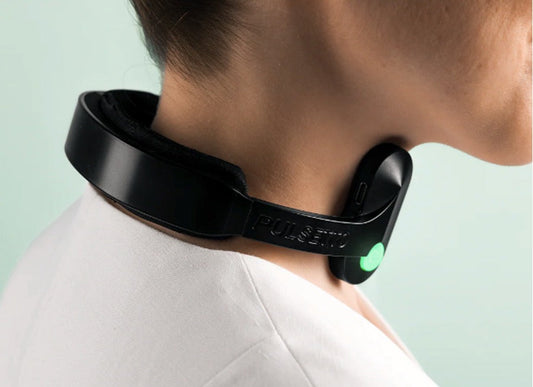
Nuropod uses this method. An earpiece clips onto the tragus, the part of the outer ear just in front of the ear canal, and sends gentle electrical pulses through that point using the proprietary AVNT waveform.
Support Your Nervous System with Nuropod

Most people use Nuropod for around 30 minutes, once or twice a day, while working, reading, or relaxing at home.
Standing up should not be the hardest part of the day. For people living with POTS, it can be. Researchers are studying the vagus nerve, which plays a large part in how the body handles stress, rest, and recovery.
Nuropod is designed to support your nervous system. A small earpiece clips onto the tragus and sends gentle electrical pulses through that point. It is backed by 10+ years of research and development, 60+ completed clinical studies, and 100+ ongoing clinical studies underway.* Try Nuropod with our 30-day return guarantee.
Frequently Asked Questions (FAQs)
Can vagus nerve stimulation help with POTS symptoms?
Vagus nerve stimulation is one of the noninvasive approaches being studied for the symptoms POTS involves. It is used alongside existing care rather than in place of it. Anyone considering it should speak with a healthcare professional who knows their history.
What is the connection between the vagus nerve and POTS?
The vagus nerve carries signals between the brain and organs, including the heart, lungs, and gut, and it plays a large part in how the body handles stress, rest, and recovery. In POTS, heart rate climbs sharply on standing and stays high, and researchers have studied whether stimulating the vagus nerve affects that pattern. The relationship is still being studied.
Which POTS symptoms are studied alongside the vagus nerve?
Heart rate on standing is the main measure, since it defines POTS. In clinical studies, postural heart rate abnormalities fell by an average of 45%.* People with POTS also commonly report dizziness, difficulty concentrating, digestive symptoms, and fatigue, and symptom patterns vary from person to person.
How is Nuropod used?
Nuropod is a small wearable. An earpiece clips onto the tragus, the part of the outer ear just in front of the ear canal, and sends gentle electrical pulses through that point using the proprietary AVNT waveform. Most people use it for around 30 minutes, once or twice a day, while working, reading, or watching television. It is used alongside existing care rather than in place of it.
*Disclaimer: Nuropod is classified by the FDA as a non-significant risk device and is not intended to diagnose, treat, cure, or prevent any disease. Clinical research referenced in this article was conducted using Parasym's neuromodulation technology under research conditions; individual results may vary. All percentage figures cited reflect findings from specific study populations and should not be interpreted as guaranteed outcomes for all users. Individuals should consult a qualified health professional regarding their personal health needs.