Vagus Nerve Ear Stimulation: Rethinking Nervous System Recovery Through Targeted Neuromodulation

Vagus nerve ear stimulation is a non-invasive approach designed to support the body’s natural regulation pathways through the outer ear. As interest in stress resilience, recovery, HRV, and nervous system balance continues to grow, ear-based vagal neuromodulation has become one of the most practical ways to engage the vagus nerve without surgery or medication.
The vagus nerve is a major communication pathway between the brain and the body, including the heart, lungs, digestive system, and immune system. It plays an important role in parasympathetic regulation, helping the body shift toward rest, recovery, and internal balance after stress.
Historically, vagus nerve stimulation was only possible through surgically implanted cervical devices. Today, non-invasive technologies have made it possible to stimulate vagal pathways externally. Among these, vagus nerve ear stimulation is especially important because the outer ear provides access to the auricular branch of the vagus nerve, making it suitable for low-level, repeatable, at-home use.
This article explains how vagus nerve ear stimulation devices work, how auricular stimulation differs from neck-based approaches, and what to look for in an evidence-informed wearable system such as Nuropod by Parasym.
What Is Vagus Nerve Ear Stimulation?
Vagus nerve ear stimulation targets the auricular branch of the vagus nerve, a sensory branch found in specific regions of the outer ear, including the tragus and cymba conchae.
When these sensory fibres are stimulated, signals travel toward the brainstem, including regions involved in autonomic regulation. From there, vagal signalling may influence heart rate variability (HRV) as a marker of autonomic function, alongside stress responsiveness, recovery, inflammatory signalling, and sleep–wake regulation.
This is why ear-based stimulation has become such an important area of neuromodulation research. It provides a non-invasive route to engage vagal pathways without directly stimulating the cervical vagus nerve in the neck.
How a Vagus Nerve Ear Stimulation Device Works
A vagus nerve ear stimulation device delivers low-level electrical signals through electrodes positioned on specific areas of the ear. These signals are typically adjusted by intensity, waveform, frequency, and session duration.
A well-designed device should provide:
-
anatomically informed auricular placement
-
controlled stimulation settings
-
low-level sensory stimulation
-
built-in safety limits
-
comfortable wear for regular use
-
consistency across sessions
This is also why dedicated vagus nerve ear stimulation should not be confused with placing a generic electrical stimulation device on or near the ear. Traditional TENS (Transcutaneous Electrical Nerve Stimulation) devices are typically designed for muscle stimulation, pain pathways, or broader sensory input. They are not usually built around auricular vagal anatomy, defined vagus-focused stimulation, or research into autonomic regulation.
For vagus nerve ear stimulation, the details matter. The effect depends not only on stimulating the ear, but on where, how, and how consistently stimulation is delivered.
Ear vs Neck Vagus Nerve Stimulation: Why the Difference Matters
Not all vagus nerve stimulation devices are designed to work in the same way. The stimulation site influences which nerve fibers are engaged, how the device is used in practice, and whether it is better suited to short, episodic sessions or consistent daily support.
Ear-Based Vagus Nerve Stimulation
Auricular stimulation targets sensory vagal fibers in the outer ear. Because the ear is accessible, this approach is well-suited to vagus nerve stimulation wearables, lower stimulation levels, and repeated daily sessions.
This makes ear-based stimulation particularly relevant for people seeking ongoing nervous system support to optimize HRV, sleep, recovery, stress resilience, and autonomic balance.

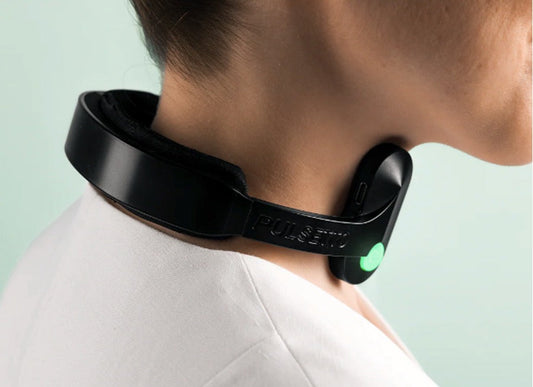
Neck-Based Vagus Nerve Stimulation
Neck-based, or cervical, stimulation targets the vagus nerve in a more complex anatomical region. The cervical vagus contains mixed sensory, motor, and cardiac fibers, and neck-based devices are often handheld, episodic, and used for shorter, more indication-specific sessions.
This does not make neck-based stimulation inherently “bad.” It reflects a different use model and a more complex stimulation area. In the neck, the vagus nerve sits alongside other tissues and mixed nerve fibers, making precise, comfortable, low-level stimulation harder to deliver consistently.
Ear-based vagus nerve stimulation offers a more targeted and practical route because it can access auricular vagal fibers through the outer ear. This makes it well-suited for wearable, repeatable daily use without continuous hand application.
What Makes the Best Vagus Nerve Ear Stimulation Device?
As interest in vagus nerve ear stimulation grows, so does the number of generic ear-based devices. However, being ear-based does not automatically mean a device is optimized for vagal neuromodulation.
When comparing options, the strongest devices tend to combine:
-
precise auricular targeting
-
defined stimulation parameters
-
safety-led design
-
regulatory compliance
-
device-specific research and evidence
-
comfort for regular use
-
a design suitable for at-home daily routines
The best vagus nerve ear stimulation device should not rely only on broad vagus nerve claims. It should be designed around the relevant anatomy, supported by research, and practical enough for consistent use.
Meet Nuropod: Built on 10+ Years of Auricular Neuromodulation Research
Nuropod by Parasym is a non-invasive wearable system designed for at-home vagus nerve ear stimulation. It represents the U.S. adaptation of Parasym’s auricular neuromodulation technology, developed under the same safety-led framework and compliant with FCC standards.
Nuropod is built on Parasym’s proprietary AVNT™ approach, or Auricular Vagal Neuromodulation Technology. This approach is designed around tragus-based auricular stimulation and informed by more than 10 years of neuromodulation research.
Nuropod stands apart from generic vagus nerve stimulation devices because it is backed by a scientific ecosystem spanning 50+ published studies and 100+ academic and scientific collaborations. Its wearable, ear-based format supports non-invasive, at-home daily use, making it especially relevant for people looking for consistent nervous system support rather than occasional, one-off stimulation.
Research linked to Parasym’s auricular approach has also reported measurable changes in vagus nerve activity within as little as 5 minutes, although the strongest effects remain with structured, repeated use over time.
What Nuropod Research Shows
Research linked to Parasym’s AVNT™ approach has reported measurable changes across autonomic regulation, HRV, sleep, fatigue, mood-related outcomes, inflammatory markers, circulation, and cognitive performance.
61% Improvement in Vagus Nerve Activity and HRV*
In placebo-controlled research, AVNT™ has been associated with a 61% improvement in vagus nerve activity and heart rate variability compared with sham stimulation.
This is important because HRV is one of the most commonly used markers of parasympathetic, or rest-and-regulate, activity. Higher HRV is generally associated with greater autonomic flexibility and better recovery capacity.
Up to 67% Increase in Vagus Nerve Activity Within 5 Minutes*
Some studies linked to Parasym’s auricular approach have reported measurable changes in vagus nerve activity within as little as 5 minutes of stimulation.
This suggests that vagus nerve ear stimulation may produce short-term autonomic effects, while still being best understood as part of a structured, long-term regulation routine.
Up to 90% Improvement After 2 Months of Structured Use*
Longer-term structured use has also been associated with greater improvements in vagus nerve activity over time. This supports the idea that nervous system regulation is usually built through consistency rather than occasional stimulation alone.
31% Improvement in Sleep Quality*
Sleep is closely connected to autonomic balance. Research linked to AVNT™ has reported around a 31% improvement in sleep quality, suggesting that vagal support may help the body shift more effectively into rest and recovery states.
48% Reduction in Fatigue Scores*
In research involving people with persistent post-viral symptoms, AVNT™-based stimulation has been associated with a 48% reduction in fatigue scores.
This is relevant because fatigue, low recovery capacity, and autonomic strain often overlap. Supporting vagal regulation may help reinforce the body’s recovery processes over time.
45% Improvement in Mood and 35% Reduction in Anxious Thoughts*
Research linked to Parasym’s AVNT™ approach has reported a 45% improvement in mood-related outcomes alongside a 35% reduction in anxious thoughts.
This matters because emotional regulation, stress responsiveness, and autonomic balance are closely connected. Vagal pathways are part of the brain-body system that helps the nervous system return toward baseline after activation.
78% Reduction in Inflammatory Markers and 28% Reduction in Oxidative Stress*
Research using AVNT™ has reported a 78% reduction in inflammatory markers in active stimulation groups compared with sham controls, together with a 28% reduction in oxidative stress markers.
Put simply, this suggests support for one of the body’s built-in pathways involved in regulating inflammatory signaling, which may be especially relevant when nervous system overload overlaps with immune stress or post-viral symptoms.
50% Improvement in Blood Vessel Flexibility and 39% Improvement in Cellular Oxygen Delivery*
Studies looking at vascular function have reported a 50% improvement in blood vessel flexibility and a 39% improvement in cellular oxygen delivery with active AVNT™ stimulation compared with sham.
This is relevant because circulation and autonomic regulation are closely linked. Heart rhythm, vascular tone, blood pressure control, and HRV all form part of the wider regulatory system that helps the body respond to stress and recover.
Well Tolerated in 200+ Cardiovascular Patients*
A pooled safety review covering more than 200 cardiovascular patients reported no serious device-related adverse events to date, with only minor, brief ear tingling or light skin sensations noted in a small number of participants.
How to Use Vagus Nerve Ear Stimulation as Part of a Daily Routine
Vagus nerve ear stimulation device works best when viewed as part of a broader nervous system support strategy. It should not replace sleep, movement, nutrition, stress management, or medical care when needed.
For people exploring vagus nerve ear stimulation, a daily routine may also include:
-
consistent sleep and wake times
-
slow breathing or breathwork
-
gentle movement
-
reduced evening stimulation
-
regular meals and hydration
-
recovery after exercise
-
social connection
-
sensory regulation practices
The goal is not to force the nervous system into calm. It is to provide repeated signals that may support regulation, recovery, and greater autonomic flexibility over time.
Best Vagus Nerve Ear Stimulation Device: Key Questions to Ask
When comparing devices, it helps to look beyond marketing claims and ask practical questions:
-
Is the device designed specifically for auricular vagus nerve stimulation?
-
Does it target the tragus or other relevant auricular regions?
-
Are stimulation settings clearly defined?
-
Is there published or device-linked research?
-
Is the design comfortable enough for regular use?
-
Is there regulatory compliance for the market where it is sold?
-
Is it intended for daily at-home use or only occasional sessions?
A strong device should combine scientific rationale with real-world usability, because consistency is central to nervous system regulation.
Final Thoughts on Vagus Nerve Ear Stimulation
Vagus nerve ear stimulation represents an important step forward in non-invasive neuromodulation. By engaging vagal pathways through the outer ear, it offers a practical way to support autonomic regulation without surgery, medication, or handheld neck application.
Nuropod by Parasym fits into this space as an ear-based, non-invasive wearable system designed for daily at-home use. Built on Parasym’s proprietary AVNT™ approach, informed by more than 10 years of auricular neuromodulation research, and linked to 50+ published scientific studies, it offers a science-led option for people looking to support nervous system balance over time.
For those exploring vagus nerve ear stimulation, the key is not simply choosing an ear device. It is choosing a system designed around the right anatomy, the right use model, and the right evidence base.
References
-
Dalle Luche R, et al. First report of safety and tolerability of low-level tragus vagal neuromodulation in cardiovascular patients. J Am Coll Cardiol. 2024.
-
Geng Y, et al. Circadian stage-dependent and stimulation duration effects of transcutaneous auricular vagus nerve stimulation on heart rate variability. PLoS One. 2022.
-
Maestri R, et al. Impact of optimized transcutaneous auricular vagus nerve stimulation on cardiac autonomic profile in healthy subjects and heart failure patients. Physiol Meas. 2024.
-
Molaeizadeh G, et al. Effects of transcutaneous vagus nerve stimulation, neurofeedback, and their combination on cortisol, anxiety, and depression subtypes in non-clinical adults. 2025.
-
Stavrakis S, et al. TREAT AF — transcutaneous electrical vagus nerve stimulation to suppress atrial fibrillation: a randomised clinical trial. JACC Clin Electrophysiol. 2020.
-
Stavrakis S, et al. Noninvasive vagus nerve stimulation in postural tachycardia syndrome: a randomized clinical trial. JACC Clin Electrophysiol. 2023.
-
Dasari TW, et al. Effects of low-level tragus stimulation on endothelial function in heart failure with reduced ejection fraction. J Card Fail. 2021;27(5).
-
Dasari TW, et al. Noninvasive low-level tragus stimulation attenuates inflammation and oxidative stress in acute heart failure. Clin Auton Res. 2023.
-
Mbikyo E, et al. Low-level tragus stimulation attenuates blood pressure in young individuals with hypertension: results from a small-scale single-blind controlled randomized clinical trial. J Am Heart Assoc. 2024.
-
Zheng Y, et al. Transcutaneous vagus nerve stimulation improves Long COVID symptoms in a female cohort: a pilot study. Front Neurol. 2024.
-
Verbanck P, et al. Transcutaneous auricular vagus nerve stimulation (tVNS) can reverse the manifestations of the Long-COVID syndrome: a pilot study. Adv Neurol Neurosci Res. 2021.
-
Natelson B, Blate M, Soto T. Transcutaneous vagus nerve stimulation for long COVID and chronic fatigue symptoms. medRxiv. 2022.
-
Dolcini J, et al. Vagal nerve stimulation and fibromyalgia: an additional therapeutic option. Clin Exp Rheumatol. 2025.
-
Jackowska M, et al. Effects of transcutaneous vagus nerve stimulation on subthreshold affective symptoms and perceived stress: findings from a single-blinded randomized trial in community-dwelling adults. 2025.
-
Kamboj SK, et al. Electroceutical enhancement of self-compassion training using transcutaneous vagus nerve stimulation: results from a preregistered fully factorial randomized controlled trial. Psychol Med. 2025.
Disclaimer: Nuropod is a non-invasive health wearable and is not a medical device. It is not intended to diagnose, treat, cure, or prevent any disease or medical condition. The statements contained in this article have not been evaluated by the FDA and do not constitute medical advice. Scientific references and study summaries presented herein describe findings from independent peer-reviewed research and are not intended to imply specific individual outcomes. Individual results may vary. Persons with existing medical conditions are advised to consult a qualified healthcare professional before commencing use.