Pinched Vagus Nerve in Neck Symptoms: What They Can Feel Like


If you are searching for pinched vagus nerve in neck symptoms, you may be dealing with a mix of symptoms that feel hard to connect. Common examples include throat tightness, pressure at the base of the skull, trouble swallowing, dizziness, heart palpitations, digestive issues, and a sudden feeling that your body is “on edge.”
Because the vagus nerve helps regulate the heart, digestion, swallowing, and stress response, symptoms can show up in more than one body system at the same time. That is one reason many people start to wonder whether something in the neck is irritating the nerve or affecting how it works.
The idea of a pinched vagus nerve in the neck is understandable, but it is often more complex than that. In some cases, there may be a structural issue in the area. More often, the problem is vagus nerve irritation, low vagal tone, or wider autonomic imbalance rather than a nerve being literally trapped or ‘pinched’ in a mechanical sense.
That distinction matters, because the best next step is usually not just trying to “release” the neck. It is understanding the full symptom pattern, ruling out urgent causes, and looking at ways to support healthier vagal regulation over time.
Why the Vagus Nerve in the Neck Matters
The vagus nerve is one of the body’s most important nerves. It starts in the brainstem, travels through the neck, and continues down into the chest and abdomen.
Along the way, it connects with major organs and body systems, including the:
-
throat
-
heart
-
lungs
-
stomach
-
intestines
This is why pinched vagus nerve in neck symptoms can feel so wide-ranging. A problem affecting vagal signaling may not stay limited to the neck. It can also affect swallowing, heart rate, digestion, and the way the body handles stress.
The neck matters because this part of the vagus nerve runs through a crowded and mechanically active area. It sits near major blood vessels and is surrounded by muscles, fascia, joints, and soft tissues that can all influence the environment around it.
That does not always mean the nerve is being physically compressed. But it does mean that neck tension, inflammation, posture, and nearby tissue changes may affect how the nerve functions.
This is one reason the neck is often central to vagus-related symptoms, even when scans do not show a clear structural problem.
Is a Pinched Vagus Nerve in the Neck a Real Thing?
Sometimes, yes. But not as often as people think.
A true pinched vagus nerve in the neck can happen when there is a clear structural problem affecting the nerve or the tissues around it. That might include:
-
significant swelling
-
a cyst or mass
-
scar tissue after surgery
-
major instability in the upper neck
-
a structural change that narrows the space around the nerve
These cases usually need proper medical assessment.
But most people searching for pinched vagus nerve in neck symptoms are dealing with something more functional than structural. In many cases, the issue is not that the vagus nerve is literally trapped. It is that the nerve’s signaling may be affected by:
-
chronic neck tension
-
poor posture
-
fascial tightness
-
inflammation
-
post-viral changes
-
autonomic imbalance
-
long-term stress and nervous system overload
This is often better understood as vagus nerve irritation or vagal dysregulation/dysautonomia rather than true compression.
That matters because symptoms can feel almost the same in both cases. Someone may feel throat tightness, dizziness, palpitations, digestive disruption, or brain fog even when scans look normal.
The symptoms are real - but the word “pinched” does not always describe what is actually going on.
Pinched Vagus Nerve in Neck Symptoms
Because the vagus nerve helps regulate so many automatic body functions, pinched vagus nerve in neck symptoms often go beyond neck discomfort alone. Many people notice a pattern that affects the throat, heart, digestion, balance, energy, and stress response at the same time. Below are some of the most common symptoms people notice, grouped by how they tend to show up in the body.
Throat and neck symptoms
These are often the symptoms that make people think the vagus nerve is being pinched in the neck.
They may include:
-
tightness in the throat
-
discomfort with swallowing
-
pressure near the upper neck or base of the skull
-
voice strain
-
symptoms that worsen with posture or neck tension
Heart and circulation symptoms
The vagus nerve helps slow and regulate the heart. When vagal signaling is off, some people notice:
-
palpitations
-
a fast heart rate with standing
-
chest discomfort
-
near-fainting
-
strong physical reactions to stress or mild activity
This kind of pattern may overlap with autonomic imbalance or postural heart rate abnormalities, not just a local neck issue.
Dizziness and “off-balance” symptoms
Some people also experience:
-
dizziness
-
a floating feeling
-
spatial disorientation
-
feeling worse when turning the head
-
increased symptoms after holding neck tension for a long time
These symptoms can feel like a balance problem, but in some cases they may reflect changes in autonomic regulation.
Digestive symptoms
Because the vagus nerve is heavily involved in digestion, symptoms may also include:
-
nausea
-
bloating
-
feeling full very quickly
-
reflux
-
irregular bowel habits
When digestive symptoms happen alongside throat symptoms, palpitations, and brain fog, it often points to a broader vagal pattern.
Fatigue, brain fog, and stress symptoms
Many people also report symptoms that seem less obviously linked to the neck, such as:
-
brain fog
-
trouble focusing
-
persistent fatigue
-
feeling wired but exhausted
-
internal tension
-
poor stress resilience
These symptoms can be some of the most disruptive, and they are often part of the same bigger picture of vagal dysregulation.
What Can Trigger Pinched Vagus Nerve in Neck Symptoms?
Most of the time, there is not one single cause.
When people search for pinched vagus nerve in neck symptoms, they are often dealing with a mix of factors that build on each other. In some cases, there may be a structural issue in the neck. But more often, symptoms develop when mechanical strain, inflammation, stress, and autonomic imbalance start overlapping.
A more useful way to think about it is as different parts of the picture.
The mechanical part: neck tension and posture
One part of the picture is the neck itself.
Long hours at a desk, forward head posture, jaw tension, mouth breathing, shallow breathing, and tight upper neck muscles can all change the environment around the vagus nerve. Even if the nerve is not literally pinched, ongoing tension in the area may still irritate nearby tissues and affect how symptoms show up.
The nervous system part: stress and overload
Another part is the state of the nervous system as a whole.
Chronic stress can reduce vagal tone and keep the body in a more activated fight-or-flight state. When that happens, the system becomes less flexible and more reactive. Symptoms may feel stronger, last longer, and become easier to trigger.
The inflammatory part: illness and post-viral changes
For some people, symptoms start or get worse after illness.
This may happen after a viral infection or during periods of immune stress. In that setting, the issue may be less about true mechanical pinching and more about sensitized vagal pathways or broader autonomic disruption.
This can help explain why fatigue, dizziness, digestive issues, and brain fog often show up alongside neck symptoms.
The injury part: trauma and physical strain
In some cases, symptoms begin after a more obvious event.
This may include:
-
whiplash
-
physical injury
-
post-surgical changes
-
long-term muscular guarding
-
trauma-related nervous system dysregulation
These factors may affect both the neck mechanically and the autonomic nervous system more broadly.
For many people, symptoms are not coming from just one problem in one spot. They are coming from the interaction between neck tension, posture and breathing patterns, nervous system overload, inflammation, post-viral changes and trauma or injury history.
How to Assess Pinched Vagus Nerve in Neck Symptoms
If you are dealing with pinched vagus nerve in neck symptoms, the goal is not just to ask whether something is physically pressing on the nerve. The more useful question is whether your symptoms point to a structural problem, a functional vagal issue, or a mix of both.
Start with the pattern
One of the clearest clues is that the symptoms often do not stay in one place. Instead, people may notice a mix of throat tightness or swallowing discomfort, neck pressure, palpitations or a racing heart, dizziness when standing or moving the head nausea, bloating, or reflux, brain fog, fatigue and poor stress tolerance.
When symptoms cluster across several body systems, that often points to a broader vagal or autonomic pattern, not just a local neck issue.
Rule out the things that need medical attention
Some symptoms should not be explained away as “just vagus nerve issues.” Medical evaluation is especially important if you experience:
-
fainting
-
chest pain
-
significant trouble swallowing
-
major shortness of breath
-
sudden or persistent voice changes
-
severe or worsening neurological symptoms
-
ongoing heart rhythm changes
These symptoms may have other causes that need proper medical assessment.
Normal imaging does not rule it out
This is an important point - a normal MRI or CT scan does not automatically mean nothing is going on. In many people, functional vagal dysregulation will not show up on standard imaging.
That is why assessment may need to look beyond structure alone.
What evaluation may include
Depending on the symptom picture, assessment may involve:
-
heart rate variability (HRV)
-
heart rate and blood pressure changes with standing
-
swallow or vocal function
-
symptom timing and triggers
-
illness history, especially after viral infection
-
trauma, posture, and breathing patterns
-
the way symptoms shift with stress, exertion, or neck tension
The real aim of assessment
The aim is not just to label the problem. It is to understand what is driving it.
Because if your symptoms are coming more from vagal dysregulation than from a true mechanical entrapment, then the right support strategy may look very different from what you would use for a purely structural neck problem.
How to Support Recovery
If pinched vagus nerve in neck symptoms are part of a bigger pattern of irritation, autonomic imbalance, or low vagal tone, recovery usually works best when it is approached from more than one angle.
Support the neck environment
When neck tension is part of the picture, reducing the mechanical load around the area can matter.
This may include posture work, ergonomic changes, gentle mobility or stability work, myofascial or manual therapy, jaw tension support and breathing retraining.
The goal is not just to “release a pinched nerve.” It is to improve the environment around the nerve and reduce the strain patterns that may be feeding symptoms.
Reduce autonomic overload
Many people also need to lower the overall stress load on the system.
That may mean:
-
improving sleep
-
pacing activities after illness
-
cutting back on overstimulation
-
reducing excessive caffeine
-
avoiding overtraining
-
building in more recovery time
These steps can sound simple, but they matter because a nervous system stuck in high alert or figh-or-flight mode tends to keep symptoms going.
Support vagal regulation more directly
For some people, lifestyle changes and neck-focused work help, but do not fully shift the pattern. That is where more direct vagal support may come in.
This is the point where vagal neuromodulation becomes relevant, especially when symptoms seem to reflect a wider autonomic issue.
Why recovery is rarely just “fix the neck”
Even when symptoms seem to start in the neck, the broader pattern often involves more than the neck itself.
That is why the best recovery strategy is usually not just about one adjustment, one stretch, or one release. It is about improving the conditions that allow the vagus nerve and the autonomic nervous system to regulate more effectively again.
How Nuropod May Help Support Vagal Regulation
One reason these symptoms can be so frustrating is that the issue is often not something that can simply be “released” or taken away. For many people, the deeper problem is reduced vagal signaling, nervous system overload, or a broader pattern of autonomic imbalance.
This is where vagus nerve stimulation (VNS) becomes relevant.
For many years, VNS was primarily delivered via the cervical vagus nerve in the neck, often through surgically implanted systems used in specialised clinical settings. More recently, non-invasive cervical devices have also become available. These approaches have played an important role in expanding interest in vagus nerve support and advancing the broader field of neuromodulation.
However, the neck is not the easiest place to stimulate effectively from outside the body. The cervical vagus sits deeper beneath the skin, the area is more sensitive, and several critical structures are located nearby. As a result, non-invasive cervical stimulation can be less straightforward when aiming for precise, comfortable, and repeatable daily use.
In parallel, an alternative approach has emerged: auricular vagus nerve stimulation (aVNS). This method targets branches of the vagus nerve accessible at the surface of the ear, offering a more direct and anatomically distinct pathway for non-invasive stimulation. Because of this accessibility, auricular stimulation is often explored as a more practical option for consistent, at-home use.
Why the ear makes a difference
The outer ear offers something the neck does not: direct non-invasive access to a vagal pathway from the surface of the body.
More specifically, the ear provides access to the auricular branch of the vagus nerve, the part of the vagal system that can be reached externally without surgery. This is what sets auricular stimulation apart from cervical approaches. Rather than trying to reach the main vagus nerve through the neck, auricular systems work through a smaller, more accessible, and more wearable entry point.
That is a big reason auricular stimulation has become such an important area within non-invasive vagus nerve support.
Why auricular stimulation is especially practical
Both cervical and auricular stimulation are designed to influence vagal activity. But auricular stimulation is especially suited to comfortable, repeatable, day-to-day use.
That matters because improving vagal regulation is usually not about one dramatic session. More often, it is about consistent neuromodulation over time.
Compared with the neck, the ear is simply a more practical access point for a wearable system meant for routine use at home. It is easier to position, easier to tolerate, and better aligned with the kind of structured daily use that long-term neuromodulation often depends on.
Meet Nuropod: built on 10+ years of auricular neuromodulation research
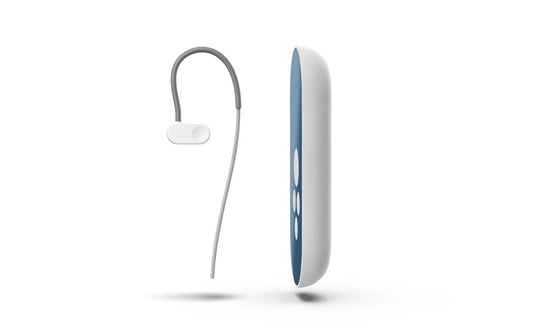
Nuropod is a non-invasive wearable vagus nerve stimulator built around Parasym’s proprietary AVNT™ (Auricular Vagal Neuromodulation Technology) approach. Rather than relying only on broad vagus nerve stimulation theory, it is based on a defined tragus-targeting auricular method developed through more than a decade of auricular neuromodulation research.
Parasym’s broader research program has explored this pathway across multiple human studies and scientific outcome areas, helping shape the stimulation approach behind Nuropod.
What sets Nuropod apart
-
built on Parasym’s proprietary AVNT™ approach
-
designed around tragus-based auricular stimulation
-
informed by 10+ years of neuromodulation research
-
linked to a broader body of work spanning 50+ published scientific studies and 100+ academic and scientific collaborations
-
designed as a wearable system for non-invasive, at-home daily use
What Nuropod research shows
Nuropod is a wearable vagus nerve stimulation device designed to support key areas associated with vagal regulation. In published research linked to Parasym’s AVNT™ approach, reported findings include:
Vagus nerve activity and HRV: 61% improvement
In placebo-controlled research, AVNT™ was associated with a 61% improvement in vagus nerve activity and heart rate variability (HRV) compared with sham stimulation. HRV is one of the most commonly used markers of parasympathetic, or rest-and-regulate, activity.
Some studies also reported:
-
up to 67% increase in vagus nerve activity within 5 minutes
-
up to 90% improvement after 2 months of structured use
-
34% improvement in cardio-vagal baroreflex gain in cardiovascular populations
Taken together, these findings suggest that auricular neuromodulation may help support the body’s ability to regulate autonomic function and stress responses more effectively over time.
Mood support: 45% improvement in low mood
Research linked to this approach has also reported a 45% improvement in low mood scores, alongside broader improvements in emotional regulation.
That matters because vagal regulation is tied not only to stress response, but also to the brain-body pathways involved in mood and resilience.

Figure 1: Nuropod scientific evidence: Changes in mood scores over 10 days. Mood was assessed using the Beck Depression Scale. Over the 10-day period, participants showed a gradual decrease in their depression scores, with the most noticeable shift appearing between Day 5 and Day 10. Many individuals also reported feeling an overall improvement in their emotional state as the stimulation period progressed.
Stress and anxious thoughts: 35% reduction
Research linked to this approach has also reported a 35% reduction in anxious thoughts.
This is especially relevant because vagal regulation is closely tied to stress responsiveness, internal tension, and how quickly the system can shift out of a more reactive state
Sleep support: 31% improvement in sleep quality
Sleep is one of the clearest real-world signs of autonomic balance.
In pilot research, AVNT™ was associated with around a 31% improvement in sleep quality, suggesting that better vagal support may also help the body shift more effectively into rest and recovery states.
Inflammation support: 78% reduction in inflammatory markers
Research using AVNT™ has reported a 78% reduction in inflammatory markers in active stimulation groups compared with sham controls, together with a 28% reduction in oxidative stress markers.
Put simply, this suggests support for one of the body’s built-in pathways for calming inflammatory signaling, which may be especially relevant when vagal dysregulation overlaps with immune stress, post-viral symptoms, or broader nervous system overload.
Circulatory support: 50% improvement in blood vessel flexibility
Studies looking at vascular function reported a 50% improvement in blood vessel flexibility and a 39% improvement in cellular oxygen delivery with active AVNT™ stimulation compared with sham.
This matters because circulation and autonomic regulation are closely linked, especially in people with stress-related or dysautonomia-like symptom patterns.
Memory and learning support: Memory +32%, learning +29%
Scientific studies have reported:
-
32% improvement in memory recall
-
29% improvement in reading and learning performance
-
19% improvement in attention measures
These findings suggest that vagal neuromodulation may support brain-body pathways involved in attention, memory, and cognitive performance.
Fatigue and post-viral support: 48% reduction in fatigue
In research involving people with persistent post-viral symptoms, AVNT™-based stimulation was associated with a 48% reduction in fatigue scores and a 35% reduction in anxious states.
Importantly, some of these improvements were still seen after the active treatment period, suggesting the effects may reflect support for underlying regulation rather than a short-lived shift alone.

Figure 1: Nuropod scientific evidence: Changes in fatigue over 10 days. Fatigue levels were measured using the Pichot Fatigue Scale. Across the 10-day period, participants showed a clear downward trend in their fatigue scores, with the largest change appearing between Day 5 and Day 10. Many individuals also noted that they continued to feel improvements in energy for about a week after the stimulation period ended. Source.
Safety and tolerability: Well tolerated in 200+ cardiovascular patients
In a pooled safety review covering more than 200 cardiovascular patients, no serious device-related adverse events were reported. The only minor effects noted were brief ear tingling or light skin sensations, suggesting the approach was generally well tolerated in structured use.
The broader takeaway
If your symptoms are being driven more by dysautonomia or low vagal tone than by true physical compression, then it makes more sense to support the vagus nerve at the level of regulation rather than focusing only on the idea of something being trapped in the neck.
This is where Nuropod’s auricular AVNT™ approach may be relevant. Rather than focusing only on the neck itself, it is designed to support vagal regulation through the ear, using a form of neuromodulation built for consistent daily use over time. At the same time, research linked to this auricular approach suggests that measurable shifts in vagal activity may occur within as little as 5 minutes, which means it may have value both as part of a long-term routine and as a shorter on-demand support option.
The bigger point is that when symptoms are being driven more by dysautonomia or poor vagal regulation than by true compression, supporting the system at the level of regulation may make more sense than focusing only on the idea of something being pinched.
References
-
Dalle Luche R, et al. First report of safety and tolerability of low-level tragus vagal neuromodulation in cardiovascular patients. J Am Coll Cardiol. 2024.
-
Geng Y, et al. Circadian stage-dependent and stimulation duration effects of transcutaneous auricular vagus nerve stimulation on heart rate variability. PLoS One. 2022.
-
Maestri R, et al. Impact of optimized transcutaneous auricular vagus nerve stimulation on cardiac autonomic profile in healthy subjects and heart failure patients. Physiol Meas. 2024.
-
Molaeizadeh G, et al. Effects of transcutaneous vagus nerve stimulation, neurofeedback, and their combination on cortisol, anxiety, and depression subtypes in non-clinical adults. 2025.
-
Stavrakis S, et al. TREAT AF — transcutaneous electrical vagus nerve stimulation to suppress atrial fibrillation: a randomised clinical trial. JACC Clin Electrophysiol. 2020.
-
Stavrakis S, et al. Noninvasive vagus nerve stimulation in postural tachycardia syndrome: a randomized clinical trial. JACC Clin Electrophysiol. 2023.
-
Dasari TW, et al. Effects of low-level tragus stimulation on endothelial function in heart failure with reduced ejection fraction. J Card Fail. 2021;27(5).
-
Dasari TW, et al. Noninvasive low-level tragus stimulation attenuates inflammation and oxidative stress in acute heart failure. Clin Auton Res. 2023.
-
Mbikyo E, et al. Low-level tragus stimulation attenuates blood pressure in young individuals with hypertension: results from a small-scale single-blind controlled randomized clinical trial. J Am Heart Assoc. 2024.
-
Zheng Y, et al. Transcutaneous vagus nerve stimulation improves Long COVID symptoms in a female cohort: a pilot study. Front Neurol. 2024.
-
Verbanck P, et al. Transcutaneous auricular vagus nerve stimulation (tVNS) can reverse the manifestations of the Long-COVID syndrome: a pilot study. Adv Neurol Neurosci Res. 2021.
-
Natelson B, Blate M, Soto T. Transcutaneous vagus nerve stimulation for long COVID and chronic fatigue symptoms. medRxiv. 2022.
-
Dolcini J, et al. Vagal nerve stimulation and fibromyalgia: an additional therapeutic option. Clin Exp Rheumatol. 2025.
-
Jackowska M, et al. Effects of transcutaneous vagus nerve stimulation on subthreshold affective symptoms and perceived stress: findings from a single-blinded randomized trial in community-dwelling adults. 2025.
-
Kamboj SK, et al. Electroceutical enhancement of self-compassion training using transcutaneous vagus nerve stimulation: results from a preregistered fully factorial randomized controlled trial. Psychol Med. 2025.
Disclaimer: Nuropod is a non-invasive health wearable and is not a medical device. It is not intended to diagnose, treat, cure, or prevent any disease or medical condition. The statements contained in this article have not been evaluated by the FDA and do not constitute medical advice. Scientific references and study summaries presented herein describe findings from independent peer-reviewed research and are not intended to imply specific individual outcomes. Individual results may vary. Persons with existing medical conditions are advised to consult a qualified healthcare professional before commencing use.