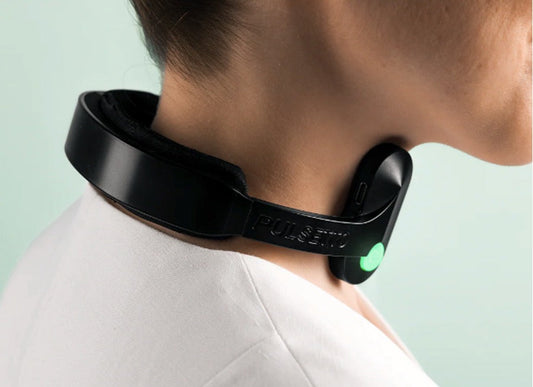
Neuromodulation Wearable: How Nervous System Technology Works

Most wearables are designed to tell you something about your body. They measure heart rate, estimate sleep stages, count steps, track movement, or turn physiological signals into a daily stress or recovery score.
A neuromodulation wearable takes a different approach. It delivers a controlled signal intended to interact with the nervous system itself.
That distinction is becoming increasingly important as the category of nervous system technology expands. Today, the term can refer to everything from vibrating wristbands and neurofeedback headsets to electrical nerve stimulators and sophisticated implanted systems. They may all be described as “neurotechnology,” yet the way they interact with the nervous system can be very different.
Nuropod is an example of a non-invasive wearable neuromodulation device that delivers controlled electrical stimulation to the ear via Parasym’s proprietary Auricular Vagal Neuromodulation Technology, (AVNT™). The technology is designed around a defined anatomical target: the auricular branch of the vagus nerve.
Understanding how this differs from passive tracking, sensory wearables, and other forms of stimulation can make it easier to judge what a neuromodulation wearable actually does and how much research sits behind it.
What Is a Neuromodulation Wearable?
Neuromodulation broadly describes the use of electrical, magnetic, acoustic, or other forms of stimulation to influence activity within the nervous system.
A neuromodulation wearable brings this concept into a system that can be worn on or positioned against the body. Depending on the technology, it may interact with a peripheral nerve, a sensory pathway, the brain, or components of the autonomic nervous system.
This makes “wearable” a description of how the technology is delivered rather than how it works biologically.
For example:
|
Type of wearable |
What it mainly does |
Everyday example |
|
Health tracker |
Measures signals from the body |
A smartwatch tracking heart rate, sleep, or activity |
|
Feedback wearable |
Uses cues to help you change a behavior |
A device that guides breathing through vibration |
|
Peripheral nerve stimulation |
Delivers electrical stimulation to a nerve outside the brain or spinal cord |
A wearable placed on the wrist, arm, or leg |
|
Vagus nerve neuromodulation |
Delivers stimulation intended to interact with vagal pathways |
An ear-based system such as Nuropod |
|
Brain stimulation |
Applies electrical or magnetic stimulation around the head |
Specialist neurostimulation headsets |
|
Implanted neuromodulation |
Stimulates nerves using surgically implanted components |
Implantable nerve stimulation systems used in clinical care |
These technologies should not be considered interchangeable simply because they are all worn on the body.
How Does Wearable Neuromodulation Work?
Your nervous system constantly exchanges information between the brain, spinal cord, peripheral nerves, sensory organs, and internal organs.
Much of this communication depends on electrical activity within nerve cells and chemical signaling between them.
Neuromodulation introduces a controlled external stimulus into this network. Depending on the technology and where it is applied, stimulation may influence the way particular nerves signal or how information is processed within connected neural pathways.
Several factors determine what happens beneath the skin:
-
the nerve or neural pathway being targeted
-
the anatomical location of stimulation
-
electrode positioning and contact
-
waveform
-
pulse frequency
-
pulse width
-
stimulation intensity
-
session duration
-
consistency of use
This is why two devices can create a similar tingling sensation while interacting with the nervous system in very different ways.
Feeling electrical stimulation tells you that current has reached sensory structures in the skin. By itself, however, that sensation does not establish which deeper neural pathway is being influenced or whether the stimulation matches a protocol investigated in scientific research.
Why the Biological Target Matters
One of the most useful questions to ask about any wearable neuromodulation device is simple:
What exactly is it trying to stimulate?
Different areas of the body contain different nerves and neural structures.
A device worn on the wrist may interact with peripheral nerves in the arm. A head-worn system may deliver current through the scalp. A neck-based vagus nerve system applies stimulation over the cervical region, while an auricular system uses selected areas of the external ear supplied by the auricular branch of the vagus nerve.
Those locations are anatomically distinct.
Electrode design, tissue depth, current distribution, stimulation protocol, and nerve distribution can all affect how a signal reaches the intended target.
A well-described neuromodulation system should therefore make several things clear:
-
which nerve or pathway it is designed around
-
why that anatomical location was chosen
-
where the electrode should be positioned
-
how stimulation is delivered
-
whether the technology and protocol have been studied
This becomes particularly important when comparing devices that all use terms such as “vagus nerve stimulation” or “nervous system regulation.”
What Types of Wearable Neuromodulation Devices Are Available?
The modern neuromodulation category includes several different approaches.
Wearable Vagus Nerve Stimulation
Non-invasive vagal neuromodulation is generally delivered either through selected areas of the external ear or through the neck.
Auricular stimulation uses areas of the ear with sensory innervation from the auricular branch of the vagus nerve. These fibers carry information toward brainstem regions involved in autonomic processing.
Cervical stimulation applies stimulation through the skin of the neck, where the vagus nerve travels deeper within a complex anatomical region containing other nerves, muscles, and blood vessels.
Both approaches involve vagal pathways, although their anatomy, electrode positioning, stimulation characteristics, and research protocols differ.
Peripheral Nerve Stimulation
Peripheral nerve stimulation targets nerves located outside the brain and spinal cord.
Depending on the system, wearable electrodes may be positioned around the wrist, arm, leg, or another part of the body.
Research and commercial applications span areas such as movement, rehabilitation, sensory processing, pain signaling, and relaxation. The biological effects depend on the particular nerve being stimulated and the protocol used.
Brain Stimulation Headsets
Some wearable neurotechnology applies low-level electrical stimulation through electrodes positioned on the scalp.
Other forms of brain stimulation, including magnetic technologies, are generally more specialized and may require larger clinical or research equipment.
The target, precision, intensity, and strength of evidence can differ considerably between individual systems.
Neurofeedback and Sensory Wearables
Neurofeedback technologies usually measure a signal and provide feedback that helps the user modify a response.
A system might monitor brain activity, breathing, heart rate, or another physiological signal and then respond through sound, light, vibration, or visual cues.
These technologies may be useful tools for self-regulation, although the mechanism is different from directly applying electrical stimulation to a defined nerve.
Wearable Pain Neuromodulation
Some electrical wearables are designed around neural pathways involved in pain processing.
Depending on the technology, stimulation may be applied close to an uncomfortable area or to a nerve elsewhere in the body with the aim of influencing pain-related signaling.
This category also includes conventional TENS systems, which typically use adhesive electrodes placed on the skin to deliver mild electrical pulses.
What Can a Wearable Neuromodulation Device Support?
There is no single answer because neuromodulation is a technological category rather than one standardized intervention.
Research across different forms of non-invasive neuromodulation has investigated areas such as:
-
autonomic nervous system activity
-
stress and recovery
-
sleep
-
attention and cognitive performance
-
persistent fatigue
-
pain processing
-
movement and rehabilitation
-
cardiovascular autonomic function
-
inflammatory signaling
-
post-viral symptoms
Evidence from one system should not automatically be transferred to another.
Research using auricular vagal neuromodulation, for example, does not establish that a vibration-based wearable or peripheral wrist stimulator produces the same physiological response.
For consumers, the more useful question is therefore:
Has this specific neural target, stimulation approach, and technology been studied for the outcome I care about?
How to Evaluate a Neuromodulation Wearable
As nervous system technology has become more popular, marketing language has expanded almost as quickly.
Terms such as “neuroscience,” “biohacking,” “vagus nerve activation,” and “nervous system reset” can sound impressive while revealing relatively little about what a device actually does.
A few criteria can make comparison much more meaningful.
1. Identify the Neural Target
Look for a clearly defined nerve, brain region, or physiological pathway.
“Supports the nervous system” is broad. A description of the anatomical target gives you much more information about the proposed mechanism.
2. Look at the Stimulation Method
Electrical stimulation, vibration, sound, magnetic fields, and behavioral feedback all interact with the body differently.
The type of stimulation should make biological sense for the structure the technology is intended to reach.
3. Look for Technology-Specific Research
A large body of general neuroscience research does not necessarily validate an individual commercial product.
Look at whether published studies used the same technology, anatomical target, electrode placement, or stimulation protocol.
That connection is particularly important when several commercial products refer to the same broad area of science.
4. Consider the Quality of the Evidence
Study design matters.
Randomized, sham-controlled studies can provide stronger evidence than testimonials or uncontrolled observations, although sample size, participant group, duration, outcome measures, and replication are also important.
Early pilot studies can still be useful, particularly in developing areas of neuromodulation, as long as their limitations are communicated clearly.
5. Review Safety Information
Electrical neuromodulation is not appropriate for everyone.
Manufacturers should provide clear instructions on contraindications, appropriate use, and when professional advice should be sought.
6. Think About Daily Use
Neuromodulation is often investigated using repeated stimulation, which means usability matters.
Consider:
-
comfort
-
electrode placement
-
session length
-
setup
-
portability
-
charging
-
ability to use the device consistently
A sophisticated technology is of limited practical value if it is too difficult or uncomfortable to use regularly.
Where Nuropod Fits Within Wearable Neuromodulation
Nuropod is a non-invasive wearable vagus nerve stimulation device developed by Parasym.
It uses proprietary Auricular Vagal Neuromodulation Technology,, or AVNT™, to deliver controlled electrical stimulation through an earpiece positioned at the tragus of the outer ear.
The tragus provides access to sensory fibers associated with the auricular branch of the vagus nerve. These fibers communicate with brainstem pathways involved in autonomic processing.
This gives Nuropod a defined anatomical approach rather than simply applying generalized electrical stimulation to the skin.
Nuropod is designed for repeated at-home use and incorporates the same core Parasym AVNT technology that has been used across the company's scientific research program.
More Than a Decade of Research Into Auricular Vagal Neuromodulation
Parasym has spent more than a decade developing and investigating auricular vagal neuromodulation.
The broader research program now includes more than 60 completed studies, alongside a substantial pipeline of ongoing research examining areas ranging from autonomic function and cardiovascular physiology to sleep, persistent fatigue, cognition, mood-related measures, and inflammatory signaling.
Rather than relying primarily on evidence about vagus nerve stimulation as a category, this research program has repeatedly used Parasym's own stimulation technology.
What Has Parasym's AVNT Technology Been Studied For?
Clinical research using Parasym technology has examined several interconnected aspects of nervous system function.
Autonomic and Vagus Nerve Activity
One of the most directly relevant areas is autonomic regulation.
Research using Parasym’s AVNT technology has reported a 61% improvement in combined vagus nerve activity and heart rate variability (HRV), two measures associated with autonomic function.
Sleep and Persistent Fatigue
Research using Parasym's auricular vagal neuromodulation technology has also explored sleep and fatigue-related outcomes.
Reported findings across individual studies include a 31% improvement in sleep scores and a 48% reduction in fatigue scores.
Sleep, energy, and autonomic function are closely interconnected, which is one reason they continue to be explored within vagal neuromodulation research.
Anxious Thoughts and Low Mood
Parasym technology has also been investigated in research examining psychological and emotional outcomes.
Across individual studies, reported findings include a 35% reduction in anxious-thought measures and a 45% improvement in low-mood measures.
Inflammatory and Oxidative Stress Markers
The vagus nerve is also involved in communication between the nervous and immune systems, which has led researchers to investigate whether vagal neuromodulation can influence markers associated with inflammation.
Studies using Parasym technology have reported:
-
78% improvement in inflammatory markers
-
28% reduction in oxidative stress markers
*The clinical findings summarised above come from different studies, participant populations, stimulation protocols and outcome measures. They should therefore be interpreted within the context and limitations of the individual research rather than as guaranteed or typical results for every Nuropod user.
What About Safety?
A retrospective analysis of Parasym's low-level tragus vagal neuromodulation technology included over 200 cardiovascular participants across seven studies.
No device-related serious adverse events were reported to date. Minor adverse events were described as temporary tingling sensations at the ear.
Nuropod users should follow the product's instructions and safety guidance. People with implanted electronic devices, significant cardiovascular or neurological concerns, or unexplained symptoms should seek appropriate professional guidance before using electrical neuromodulation. As safety has not been established across all populations, Nuropod is not recommended for children or during pregnancy.
Who Might Consider a Neuromodulation Wearable?
A wearable neuromodulation device may be of interest to someone who wants to move beyond simply measuring stress, sleep, or recovery.
Some people may particularly value:
-
a non-invasive approach
-
a defined neural target
-
an established research program behind the technology
-
repeatable vagus nerve stimulation at home
-
a system that can fit into an existing recovery or nervous system routine
That does not mean neuromodulation replaces the foundations of health - sleep, movement, nutrition, social connection, sufficient recovery, and appropriate professional healthcare remain important. Neuromodulation is better understood as another tool that can sit alongside these foundations.
Neuromodulation Wearables: From Measuring the Nervous System to Interacting With It
Wearable technology has become exceptionally good at observing us.
A watch can recognize that your heart rate changed overnight. A ring can detect differences in sleep or HRV. A recovery platform can combine multiple measurements and tell you that today looks different from yesterday.
A neuromodulation wearable adds another possibility: interacting with a defined neural pathway rather than only recording its downstream signals.
That makes the quality of the underlying technology particularly important.
Where is the stimulation applied? Which nerve is being targeted? What protocols are used? Has that particular approach been investigated? Is there research on the technology itself, or only on the broader scientific concept?
Nuropod approaches those questions through Parasym's AVNT™ platform, using a defined auricular vagal target and technology developed through more than a decade of research.
For people exploring nervous system technology, that provides a useful framework for thinking about what a neuromodulation wearable can offer: a structured, non-invasive way to incorporate targeted auricular vagal stimulation into everyday life.
Disclaimer: Nuropod is a non-invasive wearable system and is not intended to diagnose, treat, cure, or prevent any disease. Clinical research referenced in this article was conducted using Parasym's neuromodulation technology under research conditions; individual results may vary. All percentage figures cited reflect findings from specific study populations and should not be interpreted as guaranteed outcomes for all users. Individuals should consult a qualified health professional regarding their personal health needs.
References:
-
Dalle Luche R, et al. First report of safety and tolerability of low-level tragus vagal neuromodulation in cardiovascular patients. J Am Coll Cardiol. 2024.
-
Geng Y, et al. Circadian stage-dependent and stimulation duration effects of transcutaneous auricular vagus nerve stimulation on heart rate variability. PLoS One. 2022.
-
Maestri R, et al. Impact of optimized transcutaneous auricular vagus nerve stimulation on cardiac autonomic profile in healthy subjects and heart failure patients. Physiol Meas. 2024.
-
Molaeizadeh G, et al. Effects of transcutaneous vagus nerve stimulation, neurofeedback, and their combination on cortisol, anxiety, and depression subtypes in non-clinical adults. 2025.
-
Stavrakis S, et al. TREAT AF — transcutaneous electrical vagus nerve stimulation to suppress atrial fibrillation: a randomised clinical trial. JACC Clin Electrophysiol. 2020.
-
Stavrakis S, et al. Noninvasive vagus nerve stimulation in postural tachycardia syndrome: a randomized clinical trial. JACC Clin Electrophysiol. 2023.
-
Dasari TW, et al. Effects of low-level tragus stimulation on endothelial function in heart failure with reduced ejection fraction. J Card Fail. 2021;27(5).
-
Dasari TW, et al. Noninvasive low-level tragus stimulation attenuates inflammation and oxidative stress in acute heart failure. Clin Auton Res. 2023.
-
Mbikyo E, et al. Low-level tragus stimulation attenuates blood pressure in young individuals with hypertension: results from a small-scale single-blind controlled randomized clinical trial. J Am Heart Assoc. 2024.
-
Zheng Y, et al. Transcutaneous vagus nerve stimulation improves Long COVID symptoms in a female cohort: a pilot study. Front Neurol. 2024.
-
Verbanck P, et al. Transcutaneous auricular vagus nerve stimulation (tVNS) can reverse the manifestations of the Long-COVID syndrome: a pilot study. Adv Neurol Neurosci Res. 2021.
-
Natelson B, Blate M, Soto T. Transcutaneous vagus nerve stimulation for long COVID and chronic fatigue symptoms. medRxiv. 2022.
-
Dolcini J, et al. Vagal nerve stimulation and fibromyalgia: an additional therapeutic option. Clin Exp Rheumatol. 2025.
-
Jackowska M, et al. Effects of transcutaneous vagus nerve stimulation on subthreshold affective symptoms and perceived stress: findings from a single-blinded randomized trial in community-dwelling adults. 2025.
-
Kamboj SK, et al. Electroceutical enhancement of self-compassion training using transcutaneous vagus nerve stimulation: results from a preregistered fully factorial randomized controlled trial. Psychol Med. 2025.