Coffee Effect on HRV: Caffeine, Timing & Recovery Explained

Key Takeaways
-
Heart rate variability (HRV) is how much the time between your heartbeats varies, which is a sign of how well your body handles stress. Coffee does not push HRV in one predictable direction, and regular drinkers show little difference from non-drinkers once you account for other lifestyle factors.
-
HRV is easiest to compare from day to day when measured in the morning, before coffee, food, or activity, since all three factors can affect the reading.
-
In a meta-analysis of five trials, caffeine taken 10 to 60 minutes before resistance or endurance training did not change HRV in the first few minutes after exercise.
-
Caffeine’s clearest effect on HRV usually comes through sleep, since evening coffee can reduce deep sleep even on nights that feel restful.
-
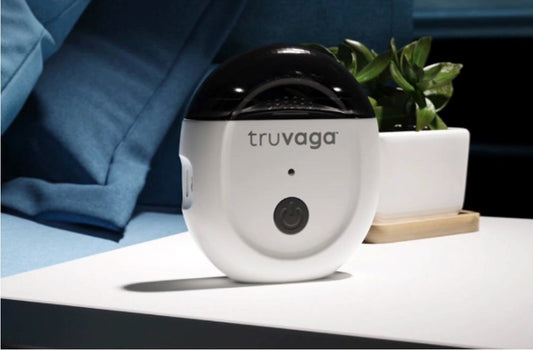
Nuropod is a wearable vagus nerve stimulation (VNS) device built on Parasym’s proprietary AVNT™ waveform. The vagus nerve carries signals between the brain and organs, including the heart, lungs, and gut. Research using Parasym’s AVNT technology has measured heart rate variability. In clinical studies, heart rate variability increased by an average of 18%.*
Why Does Coffee Affect People So Differently?
Coffee’s effect on HRV, how much the time between your heartbeats varies, depends largely on the person drinking it. The same cup can leave one person’s reading untouched and nudge another’s in either direction.
Someone who drinks coffee every day tends to build a tolerance, so the same cup may affect them less than someone who rarely has caffeine. People also clear caffeine at different speeds, partly because of genetics, so one person may feel a morning coffee into the evening while another barely notices it by lunchtime. The amount matters too, since a single cup and several strong ones are very different doses.

How Caffeine Affects HRV

A daily coffee habit is rarely the main reason behind a low HRV score.
Caffeine does not reliably lower HRV. Controlled studies have found increases in some cases, drops in others, and no change at all, so there is no single direction to expect.
Coffee also complicates the picture, since it contains many compounds besides caffeine, and studies of coffee and studies of caffeine alone are not interchangeable. Regular coffee drinkers can show different HRV from non-drinkers, but that gap largely disappears once you account for other health and lifestyle differences.
This also means you shouldn't automatically blame caffeine for a low HRV reading after coffee. A demanding day, stress, alcohol, or a short night can all lower HRV, and a normal score does not prove caffeine had no effect on sleep or recovery.
Does Coffee Timing Change an HRV Reading?
Coffee timing may change an HRV reading, since a measurement taken soon after a cup reflects that moment, along with food, movement, and posture. A morning reading after late coffee, by contrast, reflects the night in between.
In a meta-analysis of seven randomized, placebo-controlled trials in healthy, physically active adults, caffeine taken 10, 45 or 60 minutes before exercise didn’t change HRV recovery in the first 10 minutes after the workout. The trials covered both strength and aerobic sessions (Source: https://pmc.ncbi.nlm.nih.gov/articles/PMC11284693/).
Individual responses still vary, so measuring before the first cup of the day and noting when you last consumed coffee makes readings easier to compare.
How Caffeine Affects Sleep & HRV Recovery
Caffeine stays in the body for several hours, so coffee later in the day can reduce deep sleep, and disrupted sleep is a well-documented influence on overnight and next-morning HRV.
That means a lower reading after an evening coffee may reflect a lighter or shorter night rather than a direct effect of caffeine on the heart. Caffeine taken well before bedtime may affect sleep far less, which is why two people drinking the same amount at different times of day can wake up with very different HRV numbers.
The effect on sleep can also go unnoticed. Someone may fall asleep easily after an evening coffee yet still get less deep sleep, which can show up in overnight HRV even when the night felt normal.

Tea, cola, and chocolate also contain caffeine, so an afternoon tea or a chocolate dessert after dinner can affect sleep too.
What Research on Parasym’s AVNT Technology Shows About HRV
Research using Parasym’s AVNT technology has measured changes in HRV. The technology sends gentle electrical pulses through the tragus, the part of the outer ear just in front of the ear canal, where the vagus nerve reaches the skin of the ear. In clinical studies, heart rate variability increased by an average of 18%.*
This research sits within a wider program that includes 60+ completed clinical studies, 100+ ongoing clinical studies underway, and 150+ research partners.*
Support Your Nervous System with Nuropod

Nuropod is supported by peer-reviewed research and 10+ years of research and development.*
Coffee rarely explains a low HRV reading on its own. Its effect depends on your tolerance, your dose, and, above all, when you drink it, because late caffeine mainly works through sleep. Measuring before your first cup and drinking coffee earlier in the day may make readings easier to compare and help protect sleep.
Nuropod is designed to support your nervous system. A small earpiece clips onto the tragus, where the vagus nerve reaches the skin of the ear, and sends gentle electrical pulses through that point using AVNT, Parasym’s proprietary waveform. Nuropod is the most studied wearable vagus nerve stimulation device, and it comes with a 30-day return guarantee.*
Frequently Asked Questions (FAQs)
Does caffeine always lower HRV?
No. Studies have found caffeine can raise HRV in some cases, lower it in others, and leave it unchanged in many, depending on factors like the amount and how used to caffeine someone is.
How long does caffeine affect HRV after drinking coffee?
There is no fixed window. Caffeine stays in the body for several hours, so its main effect on HRV often shows up overnight if late coffee disrupts sleep. Caffeine taken well before bedtime is far less likely to affect the next morning’s reading.
Does decaf coffee affect HRV?
There is little direct research on decaf and HRV. Decaf still contains a small amount of caffeine, along with the many other compounds found in coffee, so it isn’t quite the same as drinking water. Its effect is likely smaller than regular coffee’s, though there is little research to confirm this.
Is Nuropod easy to use?
Yes. Nuropod’s earpiece clips onto the tragus, the part of the outer ear just in front of the ear canal, and it requires no clinic visit or special skill to use. Most people use it for around 30 minutes, once or twice a day, while working, reading, or relaxing at home.
*Disclaimer: Nuropod is classified by the FDA as a non-significant risk device and is not intended to diagnose, treat, cure, or prevent any disease. Clinical research referenced in this article was conducted using Parasym's neuromodulation technology under research conditions; individual results may vary. All percentage figures cited reflect findings from specific study populations and should not be interpreted as guaranteed outcomes for all users. Individuals should consult a qualified health professional regarding their personal health needs.