



Explore the science behind Nuropod
Learn how your nervous system operates and why Nuropod's precise neural target activation can unblock your body's ability to calm down, recover, and perform at its peak.


Nervous System Dysregulation: The Silent Pandemic You've Never Heard of
Millions worldwide suffer from chronic tiredness, anxious thoughts, and digestive disorders, often finding little relief despite consulting multiple healthcare specialists and trying various solutions [1].
Experts attributing this to an imbalanced nervous system.

What is the Vagus Nerve?
The vagus nerve plays a vital role in your body's ability to maintain balance and manage stress.
As a primary component of the parasympathetic nervous system, it helps regulate "rest and digest" functions that are critical for your well-being.
Vagus Nerve Stimulation as a Pathway to Health
Vagus Nerve Stimulation (VNS) means sending targeted electrical signals to specific fibers of the vagus nerve to positively affect the body's physical and mental state [7].
For decades, medical experts have explored the potential of stimulating the vagus nerve to address a wide range of physical and mental health symptoms.

Benefits of vagus nerve stimulation
Vagus nerve stimulation is FDA-approved therapy for headaches, and therapy-resistant depressive states. It has also been scientifically proven to relieve a host of different health symptoms including [11].
Chronic tiredness
Reduced Heart Rate Variability (HRV)
Depressive states
Anxious thoughts
Digestive issues
Respiratory issues
Inflammatory symptoms
Cognitive impairment
Low mood
Chronic pain
Headaches
Sleep issues
The importance of precision in vagus nerve stimulation

Ensuring The Highest Quality Testing and Safety Standards
Since 2014, we've tried to better understand the complex and crucial role the vagus nerve plays in overall health.
Selective and safe vagus nerve stimulation has been at the core of our mission, given the nerve's extensive role and complex network of approximately 100,000 fibers.
Modulation vs Stimulation
When it comes to the vagus nerve, more stimulation isn't always better. Achieving effective results requires precision and careful control to avoid unintended consequences.

Convenience without gel
Vagus nerve stimulation is now more convenient than ever, thanks to innovative technology that eliminates the need for messy conductivity gels.
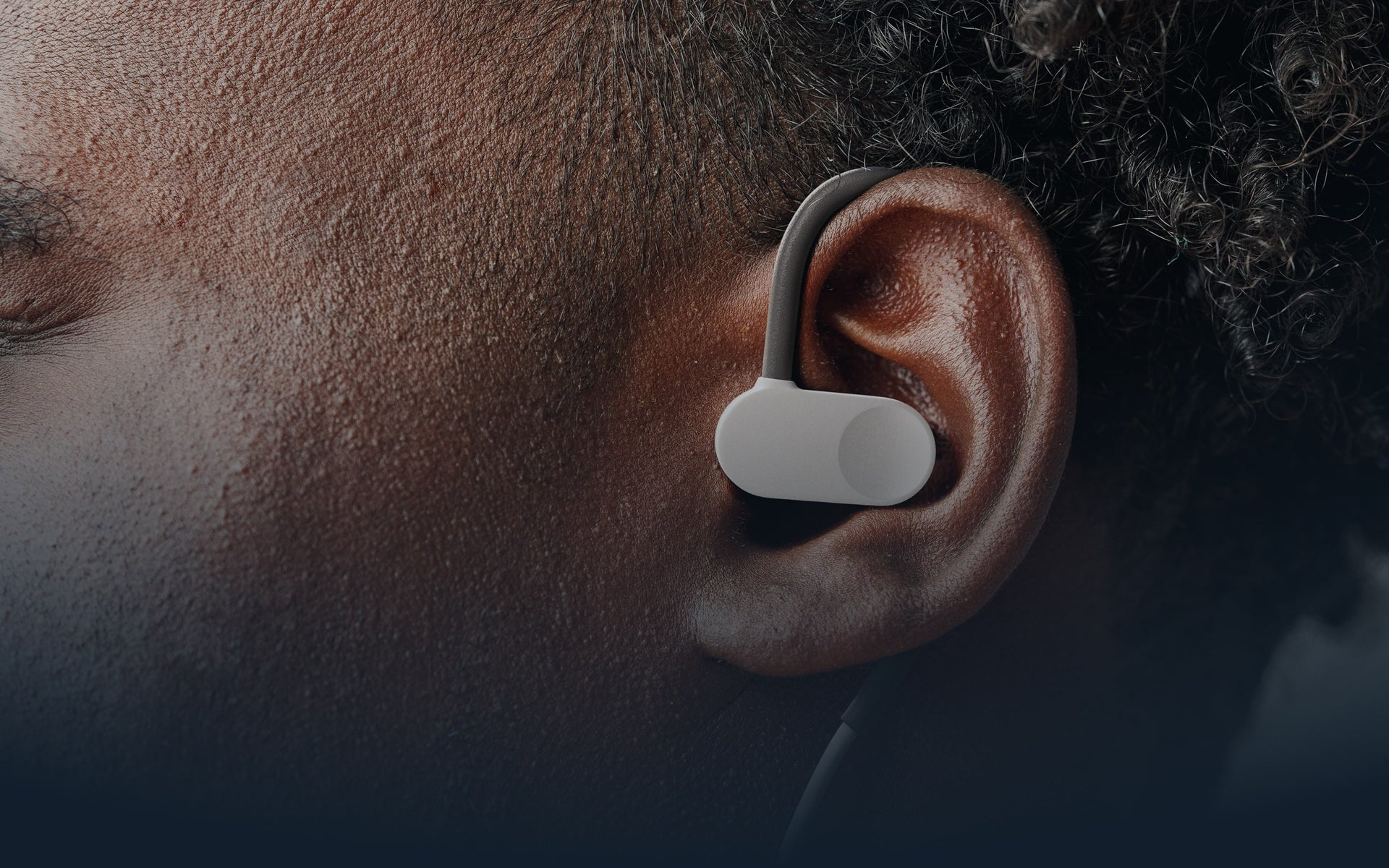
The most scientifically studied device
Experience the future of bioelectric health
Scientifically validated, wearable neurotech, in the palm of your hand

References
[1] Manuel A. Friese & Markus Glatzel. Vagus nerve inflammation contributes to dysautonomia in COVID-19, 2023, doi: 10.1007/s00401-023-02612-x
[3] SB, AK & GR. Vagus Nerve as Modulator of the Brain–Gut Axis in Psychiatric and Inflammatory Disorders, 2018, doi: 10.3389/fpsyt.2018.00044
[4] Chaoren Tan, Qiqi Yan, et al. Recognizing the role of the vagus nerve in low moods from microbiota-gut brain axis, 2022, doi: 10.3389/fneur.2022.1015175
[7] Kasia Kozlowska, Peter Walker, et al. Fear and the Defense Cascade: Scientific Implications and Management, 2015, doi: 10.1097/HRP.000000000000006
[8] Bashar W. Badran, Logan T. Dowdle, et al. Neurophysiologic effects of transcutaneous auricular vagus nerve stimulation (taVNS) via electrical stimulation of the tragus: A concurrent taVNS/fMRI study and review, 2018, doi: 10.1016/j.brs.2017.12.009
[10] Stephan L Blanz, Eric D Musselman, et al. Spatially selective stimulation of the pig vagus nerve to modulate target effect versus side effect, 2023, doi: 10.1088/1741-2552/acb3fd
[11] Christopher W Austelle, Georgia H O'Leary, et al. A Comprehensive Review of Vagus Nerve Stimulation for low moods, 2021, doi: 10.1111/ner.13528
[14] P Rutecki. Anatomical, physiological, and theoretical basis for the antiepileptic effect of vagus nerve stimulation, 1990, doi: 10.1111/j.1528-1157.1990.tb05843.x
[15] Eleni Frangos, Jens Ellrich & Barry R. Komisaruk. Non-invasive Access to the Vagus Nerve Central Projections via Electrical Stimulation of the External Ear: fMRI Evidence in Humans, 2015, doi: 10.1016/j.brs.2014.11.018