Best Vagus Nerve Stimulation Device: What to Look For in 2026

As interest in nervous system regulation and vagus nerve stimulation has grown, so has the number of devices claiming to support stress, recovery, sleep, focus, and autonomic balance.
But despite how similar many of these products look online, they are often built around very different technologies, stimulation methods, and levels of scientific validation.
Some systems are based on clinically studied neuromodulation approaches designed for repeatable vagal pathway engagement. Others rely more heavily on wellness positioning, generalized relaxation effects, or broad references to vagus nerve science without meaningful device-specific evidence.
For someone trying to identify the best vagus nerve stimulation device, those differences matter.
The real question is not simply whether a device creates a sensation. It is whether it is designed to engage vagal pathways through a structured, anatomically targeted, and evidence-informed neuromodulation approach.
In this guide, we’ll explain:
-
how non-invasive vagus nerve stimulation works
-
why stimulation method and target site matter
-
how ear-based and neck-based systems differ
-
what to look for in a credible VNS device
-
and why Nuropod’s AVNT™ auricular neuromodulation approach stands apart from many consumer devices in this category.
This guide is designed for people researching vagus nerve stimulation for stress, sleep, nervous system dysregulation, fatigue, post-viral recovery, and broader autonomic support while trying to understand which devices are built around clinically structured neuromodulation rather than general wellness stimulation.
Why the Vagus Nerve Matters
To understand what makes the best vagus nerve stimulation device, it helps to first understand what the vagus nerve actually does.
The vagus nerve is one of the body’s main regulatory nerves. It runs from the brainstem down through the neck and into the chest and abdomen, connecting with major organs including the heart, lungs, stomach and intestines.
It plays a central role in the parasympathetic nervous system, the part of the nervous system involved in rest, recovery, digestion, and regulation.
That means the vagus nerve helps influence things like:
-
heart rate
-
stress response
-
digestion
-
inflammation
-
sleep regulation
-
brain-body communication
This is why VNS has attracted so much attention. The vagus nerve is not just linked to relaxation - it is part of a wider regulatory network that helps the body shift between stress, recovery, and internal balance.
So when people look for the best option, what they are often really looking for is a device that may help support that broader regulatory system in a meaningful and measurable way.
What Is Vagal Tone?
A term you will often see in this space is vagal tone.
Vagal tone refers to how effectively the vagus nerve helps the body regulate itself. In simple terms, it reflects the system’s ability to shift out of stress, support recovery, and adapt to what the body needs.
When vagal tone is functioning well, the body is generally better able to:
-
regulate heart rate
-
support digestion
-
recover after stress
-
maintain healthier sleep patterns
-
manage inflammatory signaling
-
stay more flexible under physical and emotional load
When vagal tone is low or poorly regulated, people may be more likely to experience patterns such as poor stress tolerance, fatigue, sleep disruption, digestive issues, brain fog or feeling stuck in a more activated state.
This is one of the main reasons non-invasive vagus nerve stimulation has become such an active area of interest. The question is not just whether a device creates a sensation. It is whether it may help support the body’s regulatory capacity in a meaningful way over time.
The real issue is not just stimulation. It is whether the device is designed to support genuine neuromodulation.
Why So Many People Still Feel Unsure About Vagus Nerve Stimulation Devices
Interest in vagus nerve stimulation has grown rapidly in recent years, especially among people dealing with chronic stress, poor sleep, burnout, nervous system dysregulation, and post-viral recovery issues.
But once people begin researching VNS devices, the category often becomes confusing.
Many vagus nerve stimulation devices look similar on the surface while working very differently underneath. Some stimulate through the ear, others through the neck, and some rely more on vibration or sensory relaxation than structured neuromodulation.
As a result, it can be difficult to understand which systems are built around clinically studied vagal pathway engagement — and which are primarily wellness-oriented products designed for short-term calming effects.
That distinction matters because in non-invasive neuromodulation, the method of delivery matters as much as the stimulation itself.
How Non-Invasive Vagus Nerve Stimulation Works
Vagus nerve stimulation did not begin with consumer wellness devices. It started with surgically implanted systems, first used in more specialized medical settings for conditions such as drug-resistant epilepsy and later studied in other areas as well.
Those systems showed that stimulating the vagus nerve could have real physiological effects. But they also required surgery, which made them unsuitable for most people.
That is what led to the development of non-invasive vagus nerve stimulation, also called transcutaneous vagus nerve stimulation or tVNS.
Instead of using implanted electrodes, tVNS devices deliver controlled electrical stimulation through the skin at specific anatomical sites where vagal pathways can be reached from outside the body.
In simple terms, the goal is to send a signal into vagal pathways that can influence broader regulatory circuits involved in autonomic balance, stress response, inflammation, mood and cognitive function.
But this is where quality really matters - not every device marketed as a vagus nerve stimulator is doing the same thing. Whether a system produces meaningful neuromodulation depends on several factors, including:
-
where it stimulates
-
how precisely it targets the nerve pathway
-
the waveform and stimulation settings
-
the quality of the engineering
-
whether the method is supported by device-specific published research
That is why the best vagus nerve stimulation device is not simply the one that creates a strong sensation. It is the one designed to stimulate the right pathway, in the right way, with evidence that the approach is doing more than creating a surface-level sensation.
Is Vagust nerve stimulation safe?
Vagus nerve stimulation can be safe when delivered through a well-designed device, used as directed, and supported by device-specific safety data. Non-invasive systems avoid surgery, but safety still depends on where and how stimulation is applied.
Published human safety and tolerability research is therefore more reassuring than general claims about “vagus nerve support.” People with implanted electronic devices, significant heart rhythm issues, pregnancy, or complex medical conditions should check suitability before use.
Why Stimulation Site Matters
One of the biggest differences between vagus nerve stimulation devices is where they stimulate. This matters because not every access point gives the same level of precision, comfort, or research support.
Among non-invasive options, the outer ear is especially important. That is because it gives access to the auricular branch of the vagus nerve, a sensory branch that can be reached from the surface of the body.
This makes auricular stimulation different from neck-based approaches. Instead of trying to stimulate the main vagus nerve through the neck, auricular systems work through a smaller and more accessible branch.
Why the ear stands out
For people comparing devices, the ear has several practical advantages.
Auricular stimulation may be better suited to:
-
lower-intensity stimulation
-
comfortable daily use
-
more precise anatomical targeting
-
wearable, hands-free formats
-
structured long-term use at home
That is a big part of what makes ear-based systems so relevant when people are searching for the best vagus nerve stimulation device.

How this differs from cervical stimulation
Cervical vagus nerve stimulation targets the vagus nerve through the neck rather than the outer ear. This approach is part of the wider non-invasive VNS field and has been studied for specific use cases, particularly short-duration, targeted applications related to headache disorders.
However, the cervical vagus sits deeper in the neck and runs close to other sensitive structures, which can make stimulation more dependent on placement, intensity, and correct use.
For that reason, cervical systems are often less naturally suited to comfortable, hands-free daily wear than auricular devices designed around the outer ear.
The bigger takeaway
If someone is looking for a device designed for regular home use, the anatomical access point matters. The best vagus nerve stimulation device is not simply the one that stimulates somewhere near the vagus nerve, but the one that uses a site that is practical, well tolerated, and supported by meaningful research.
Different stimulation approaches are also suited to different types of use: some are designed for targeted, short-duration applications, while others are built around repeatable, lower-intensity stimulation that can be integrated into a daily routine.
What Types of Vagus Nerve Stimulation Devices Are on the Market?
When comparing vagus nerve stimulation devices, it is important to recognize that products in this category are not all built around the same type of neuromodulation approach.
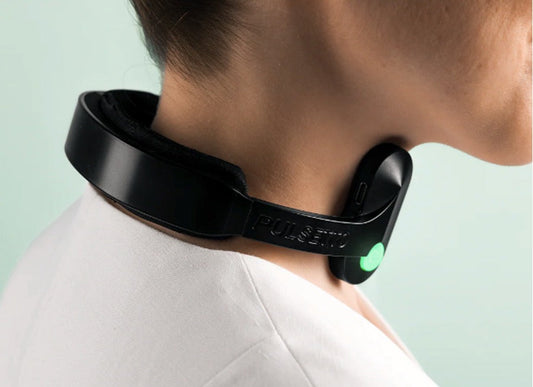
Devices such as Pulsetto, GammaCore, Truvaga, Sensate, and other wearable or handheld systems are often discussed together, but they can differ significantly in where they stimulate, how stimulation is delivered, and how they are intended to be used.
Because of this, meaningful comparison is less about grouping devices under a single label and more about understanding the underlying method each system is based on. Looking more closely at these differences can help clarify which type of approach is most appropriate depending on individual goals and expectations.
1. Auricular vagus nerve stimulation devices (Nuropod)
Auricular vagus nerve stimulation devices stimulate the outer ear, targeting regions associated with the auricular branch of the vagus nerve. This is the category most closely aligned with wearable, non-invasive daily-use neuromodulation, because the outer ear provides a practical access point for low-level stimulation.
However, not all ear-based devices are the same.
Many generic auricular stimulators use ear clips or electrical stimulation without clear evidence of anatomically validated placement, defined stimulation parameters, or device-specific research. In these cases, the device may be “ear-based,” but that does not necessarily mean it is optimized for vagal neuromodulation.
Nuropod is designed to stand apart from this broader category by combining:
-
anatomically validated ear placement
-
defined stimulation settings based on Parasym’s proprietary AVNT neuromodulation approach
-
extensive device-specific research
-
a safety-led design built on CE-marked technology
-
a wearable format designed for longer, consistent sessions at home
This distinction matters because the benefit of auricular neuromodulation depends not only on stimulating the ear but also on where, how, and how consistently stimulation is delivered.
2. Cervical vagus nerve stimulation devices
Cervical vagus nerve stimulation devices target the vagus nerve through the neck rather than the outer ear. Within this group, it is useful to separate handheld systems from collar-style devices:
-
Handheld cervical devices are usually placed manually against the neck for short sessions. Some regulated cervical VNS systems have been developed for specific use cases, particularly migraine and cluster headache-related applications. These devices are typically more episodic in use and depend on correct placement, timing, and contact during each session.
-
Collar-style cervical devices use electrodes positioned around the neck area. These may appear more wearable than handheld systems, but they still stimulate a more anatomically complex region than the outer ear. The cervical vagus sits deeper and closer to other sensitive structures, so comfort, placement consistency, stimulation intensity, and device-specific safety data become especially important.
Compared with auricular systems, cervical devices are often more suited to targeted, short-duration use than to low-intensity, hands-free daily neuromodulation. This does not make them irrelevant, but it means they should be assessed according to their intended use, anatomical target, and published device-specific evidence.
3. Vibration-based relaxation devices
Some consumer products use mechanical vibration, often applied to the chest, throat, or sternum, and describe themselves as supporting the vagus nerve.
These devices may still help people relax, but they are not the same as targeted electrical vagus nerve stimulation. Their effects are generally better understood as somatic or relaxation-based, rather than as direct vagal neuromodulation.
| Characteristic | Nuropod (Parasym) | GammaCore | Pulsetto | Sensate | Truvaga |
| Stimulation Site | Outer ear (auricular branch) | Neck (cervical vagus nerve) | Neck | Chest (sternum area) | Neck |
| Stimulation Type | Electrical (tVNS) | Electrical | Electrical | Vibration (non-electrical) | Electrical |
| Target Approach | Direct auricular vagus nerve stimulation | Cervical vagus nerve stimulation | Cervical stimulation | Indirect relaxation-based stimulation | Cervical stimulation |
| Typical Use Pattern | Structured, repeatable use | Short episodic + preventive | Short, app-guided sessions | Relaxation sessions | Short, repeated sessions |
| Format | Wearable | Handheld | wearable (neck collar) |
chest-placed |
Handheld |
| Hands-Free Use | Yes | No | Yes (stationary) |
Yes | No |
| Gel Required | No | May require conductive gel for optimal contact | Yes |
No | Yes |
| Designed for Daily Use | Yes | Typically episodic use | Can be used regularly | Yes (relaxation-focused) | Short daily sessions |
| Primary Focus | Neuromodulation / autonomic regulation | Clinical episodic treatment (e.g. headache) | Guided stimulation / relaxation | Relaxation / somatic calming | Short-session stimulation |
| Evidence Base (Reported Research Scope) | 50+ published studies linked to Parasym’s AVNT™ research program | Clinical studies for Headaches | Limited publicly available device-specific research | Not based on direct VNS research | Limited publicly available device-specific research |
| Safety Profile | Generally well tolerated; no serious device-related adverse events reported in published studies | Clinically evaluated; mild side effects reported (e.g. discomfort, dizziness) | Generally mild sensations (e.g. tingling, irritation) reported | Non-electrical; generally well tolerated | Generally mild sensations typical of electrical stimulation |
| Regulatory Positioning | CE-marked (EU), FCC compliant (US) | FDA-cleared for specific indications (prescription use in some markets) | Consumer wellness device | Consumer wellness device | Consumer wellness device |
How to Evaluate the Best Vagus Nerve Stimulation Device
In practice, choosing a vagus nerve stimulation device often depends on how well it fits into everyday use. Some systems are designed for short, occasional sessions, while others are intended for more consistent, routine-based use over time.
This distinction can shape both the user experience and how outcomes develop. For many people, factors such as comfort, ease of use, and the ability to integrate the device into a regular routine are key considerations alongside the underlying technology.
When comparing options, it is also useful to look beyond branding or surface-level features. Understanding how a device is built, including its stimulation method, target site, and level of device-specific research, can provide a more meaningful basis for evaluation.
Here are the main things to look at:
Regulatory standards
A serious device should meet recognized safety standards for the market it is sold in.
A serious device should be clear about the safety and regulatory standards it meets in the market where it is sold. In the U.S., some medical vagus nerve stimulation devices may have FDA clearance or authorization for specific medical indications, while consumer electronic devices may instead meet FCC requirements related to electromagnetic safety. In the EU and UK, CE marking indicates assessment against relevant safety and performance requirements.
These are not the only things that matter, but they are an important starting point.
Stimulation method
A good device should make clear:
-
where it stimulates
-
what nerve pathway is it targeting
-
whether it uses electrical stimulation or something else
-
whether the design is intended for daily use or occasional use
This helps separate true neuromodulation systems from devices that mainly offer general sensory or relaxation effects.
Stimulation design
A credible tVNS device should be built around a defined stimulation method, not just a general claim of “activating the vagus nerve.”
This includes the anatomical target, stimulation pattern, intensity approach, and recommended session structure. These details matter because neuromodulation is protocol-dependent: outcomes can vary depending on where stimulation is delivered, how it is dosed, and whether the approach reflects methods used in published human research.
Research studies
This is one of the biggest differentiators.
Look for:
-
peer-reviewed studies
-
placebo- or sham-controlled research
-
device-specific data, not just general vagus nerve theory
-
published safety findings, not just outcome claims
A device supported only by testimonials or vague references to “science-backed” technology is not the same as one linked to published scientific research.
Safety and tolerability
Safety and tolerability should be considered in relation to the stimulation site, intensity, and intended pattern of use. Auricular devices stimulate a sensory branch of the vagus nerve from the outer ear, which can make them well suited to low-level, repeatable use. Cervical devices, by contrast, stimulate through the neck, where the vagus nerve sits deeper and closer to other important structures.
Depending on the device design and stimulation output, this may make correct placement, dosing, and safety validation especially important. This is why published human safety data and clear usage guidance matter when comparing different types of vagus nerve stimulation devices.
Design for real-world use
The best vagus nerve stimulation device is not just the one with the strongest concept. It also has to be realistic to use.
That includes questions like:
-
Is it comfortable enough for repeated use?
-
Is it wearable or hands-free?
-
Is it built for structured daily use?
-
Does it fit easily into normal life?
Because even a well-designed technology has limited value if people are unlikely to use it consistently.
The best device is not just the one that stimulates. It is the one that combines a credible target site, clearly defined stimulation method, meaningful research support, strong safety profile, and practical day-to-day usability.
Why Nuropod Stands Out
If you are looking for the best choice, the goal is not just to find something that feels calming in the moment. It is to find a system built around the right anatomy, the right stimulation method, and a level of research support that makes the claims more credible.
This is where Nuropod stands apart.
Nuropod is a non-invasive wearable vagus nerve stimulator built around Parasym’s proprietary AVNT™ (Auricular Vagal Neuromodulation Technology) approach. It uses tragus-based auricular stimulation, meaning it works through the outer ear rather than the neck.
That matters because the ear gives direct access to the auricular branch of the vagus nerve, a pathway especially well suited to non-invasive stimulation and regular home use.
Nuropod is designed around a robust and rigorous research-led framework compared to most consumer devices in this space.
Key differentiators include:
-
auricular stimulation rather than neck-based surface stimulation
-
Parasym’s proprietary AVNT™ approach
-
a research program built over 10+ years
-
connection to broad body of work spanning 50+ published scientific studies
-
100+ academic and Scientific collaborations
-
a wearable format designed for structured daily use at home

Why that matters in practice
A lot of products in the VNS space talk about relaxation, stress support, or nervous system balance. But the real question is whether the device is built around a method that is anatomically specific, engineered for repeatable use, and supported by published research.
That is especially important in a category where many products look similar on the surface but differ a lot in:
-
target site
-
stimulation precision
-
transparency
-
safety support
-
depth of evidence
Built for daily use, but flexible enough for on-demand support too
Nuropod is designed as a hands-free, ear-based wearable, which makes it more practical for consistent daily use than many neck-based or hand-held devices.
That matters because vagal regulation is usually not about one dramatic session. More often, it is about repeated neuromodulation over time, with effects building through regular use.
At the same time, Nuropod is not limited to long-term use alone. Research linked to Parasym’s auricular AVNT™ approach suggests that measurable changes in vagus nerve activity can occur within as little as 5 minutes, which means the system may also be useful as an on-demand support option - while built for structured daily neuromodulation, it can also be used more flexibly in the moment, with research suggesting that even a short session may produce tangible physiological effects.
This combination of practical design, anatomical specificity, research depth, and both long-term and on-demand usability is a big part of why Nuropod confidently belongs to the conversation about the best vagus nerve stimulation device.
Research Behind Nuropod
When reviewing research in this field, it is important to distinguish between general findings on vagus nerve stimulation and studies linked to specific devices or stimulation methods.
While the broader concept of vagal neuromodulation is supported by a growing body of scientific literature, outcomes can vary depending on how stimulation is delivered, how consistently it is used, and how closely a device aligns with studied protocols.
For this reason, device-specific research and clearly defined methodologies are essential when interpreting reported results. In studies using Parasym’s AVNT™ approach, published findings have reported effects across several areas related to vagal regulation, autonomic balance, and recovery.
Vagus nerve activity and HRV: 61% improvement
In placebo-controlled research, AVNT™ was associated with a 61% improvement in vagus nerve activity and heart rate variability (HRV) compared with sham stimulation.
Some studies also reported:
-
up to 67% increase in vagus nerve activity within 5 minutes
-
up to 90% improvement after 2 months of structured use
-
34% improvement in cardio-vagal baroreflex gain in cardiovascular populations
This matters because low HRV and related autonomic markers are widely used as indicators of parasympathetic regulation.
Fatigue and post-viral support: 48% reduction in fatigue
In research involving people with persistent post-viral symptoms, AVNT™-based stimulation was associated with a 48% reduction in fatigue scores and a 35% reduction in anxious states.
A pilot study in women with Long COVID also found significant improvements in cognition, mood, sleep, and fatigue after a short home-based tVNS protocol, with some benefits still present at follow-up.
Inflammation support: 78% reduction in inflammatory markers
Research summaries linked to this approach have also reported a 78% reduction in inflammatory markers and a 28% reduction in oxidative stress markers.
This is relevant because vagal pathways are closely tied to inflammatory regulation and broader stress physiology.
Mood support: 45% improvement in low mood
Research linked to this approach has also reported a 45% improvement in low mood scores, alongside broader improvements in emotional regulation.
That matters because vagal regulation is tied not only to stress response, but also to the brain-body pathways involved in mood and resilience.
Sleep support: 31% improvement in sleep quality
Sleep is one of the clearest real-world signs of autonomic balance.
In pilot research, AVNT™ was associated with around a 31% improvement in sleep quality, suggesting that better vagal support may also help the body shift more effectively into rest and recovery states.
Stress and anxious thoughts: 35% reduction
Research linked to this approach has also reported a 35% reduction in anxious thoughts.
This is especially relevant because vagal regulation is closely tied to stress responsiveness, internal tension, and how quickly the system can shift out of a more reactive state
Circulation support: 50% improvement in blood vessel flexibility
Published research summaries connected to Parasym’s AVNT™ approach report a 50% improvement in blood vessel flexibility and a 39% improvement in cellular oxygen delivery.
That matters because circulation and autonomic regulation often affect each other closely, especially in people dealing with stress-related or dysautonomia-like patterns.
Memory and learning support: Memory +32%, learning +29%
Scientific research summaries linked to this approach report:
-
32% improvement in memory recall
-
29% improvement in reading and learning performance
-
19% improvement in attention measures
These findings suggest that vagal neuromodulation may support brain-body pathways involved in focus, memory, and cognitive performance.
Safety and tolerability: Well-tolerated in 200+ cardiovascular patients
In a pooled safety review covering more than 200 cardiovascular patients, no serious device-related adverse events were reported. The only minor effects noted were brief ear tingling or light skin sensations, suggesting the approach was generally well tolerated in structured use.
A lot of devices in this space talk about calm, balance, or nervous system support. What makes the difference is whether those claims are tied to a defined method and a meaningful body of published evidence.
Nuropod in Everyday Use
Research linked to Parasym’s AVNT™ approach suggests that the biggest benefits tend to build through consistent use over time. In other words, this is not just about creating a short-lived sensation during a single session. It is about supporting the nervous system through repeated, structured neuromodulation.
Built for real life
Nuropod’s ear-worn design makes it easier to fit into everyday routines.
It is designed to be:
-
Hands-free, wearable system
-
suitable for use at home
-
easy to use while resting, working, or winding down in the evening
-
free from gel, manual holding, or constant session management
That practical side matters because even strong technology has limited value if it is too awkward to use consistently.
Conclusion: Choosing the Right Vagus Nerve Stimulation Device
If you are comparing vagus nerve stimulation devices, focus on five things:
-
Target site: Does it stimulate the outer ear, the neck, or somewhere else?
-
Evidence: Is there device-specific, peer-reviewed research behind it?
-
Safety: Does it meet recognized standards such as FCC compliance or CE marking?
-
Transparency: Does the company clearly explain how the stimulation works?
-
Usability: Is it practical for consistent daily use rather than only occasional sessions?
As with many approaches to nervous system regulation, responses to non-invasive vagus nerve stimulation can vary between individuals. Factors such as baseline physiology, consistency of use, and overall health context may influence how noticeable changes become or how quickly they occur.
For that reason, it is generally more helpful to think of vagus nerve stimulation as a supportive tool that may contribute to broader regulatory processes over time instead of expecting immediate results after a single session.
Ultimately, the best vagus nerve stimulation device is one that is built on sound science, designed with anatomy in mind, and practical enough to become part of a consistent daily routine. Taking the time to compare the evidence, safety standards, stimulation method, and overall design can help you choose a device that aligns with your health goals and supports long-term nervous system regulation.
Continue Exploring Vagus Nerve Health:
Best Vagus Nerve Stimulation Device for Sleep in 2026
Vagus Nerve Test: How to Check Your Nervous System at Home
Best Vagus Nerve Stimulation Device for Anxiety Support in 2026
HRV During Sleep: What It Reveals About Nervous System Recovery
Frequently Asked Questions
How does vagus nerve stimulation (VNS) work?
VNS uses low-level electrical pulses to activate vagal pathways. These signals travel to brainstem centers involved in autonomic balance and can influence broader systems linked to stress regulation, inflammation, mood, cognition, and internal recovery.
Why is auricular stimulation often preferred for daily wearable use?
Auricular stimulation works through the outer ear, where the auricular branch of the vagus nerve can be reached from outside the body - this matters because it allows stimulation through a more accessible, practical site that is generally better suited to comfortable, repeatable daily use than the neck.
Is VNS mainly for quick effects or long-term use?
Both can matter.
Research linked to Parasym’s AVNT™ approach suggests that measurable autonomic changes may occur within as little as 5 minutes, which supports on-demand use. At the same time, the broader pattern of findings suggests that consistent daily use is where effects may build more meaningfully over time.
So the stronger model is not usually “either-or.” It is short-term responsiveness plus longer-term cumulative modulation.
Do you need a prescription for Nuropod?
No. Nuropod is designed for self-administered at-home use and does not require a prescription in the United States.
It is intended for adults seeking a non-invasive, evidence-informed wearable for daily vagal support. Anyone with a significant medical condition or implanted electronic device should check with a qualified healthcare professional before use.
Is tVNS the same as TENS?
No.
Both use electrical stimulation through the skin, but they are designed for different targets. TENS is mainly used for pain support through peripheral sensory nerves. tVNS is designed to target vagal pathways involved in autonomic regulation and broader brain-body signaling.
What makes Nuropod different from many consumer devices?
Nuropod’s main differentiator is its proprietary AVNT™ method, and the large device-specific research framework behind it.
It is built around:
-
anatomically targeted auricular stimulation
-
more than 10 years of neuromodulation research
-
50+ published scientific studies
-
150+ academic and scientific collaborations
-
a wearable format designed for both daily use and more flexible on-demand support
Disclaimer: Nuropod is a non-invasive health wearable and is not a medical device. It is not intended to diagnose, treat, cure, or prevent any disease or medical condition. The statements contained in this article have not been evaluated by the FDA and do not constitute medical advice. All scientific references and study summaries describe findings from peer-reviewed third-party research and do not imply specific individual outcomes. Individual results may vary. Readers are advised to consult a qualified healthcare professional regarding their personal health circumstances prior to initiating any new therapeutic protocol.